Narrowing the Scope to a Single City
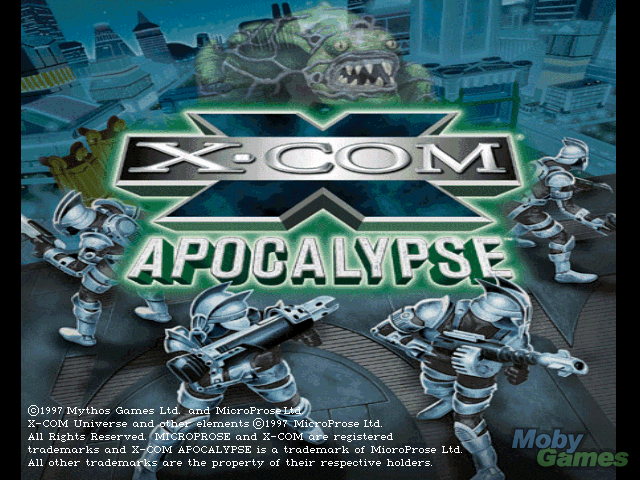
MicroProse released X-COM: Apocalypse in 1997 as the third installment in the original X-COM series, following UFO Defense and Terror from the Deep. Where those earlier games had you defending the entire globe from alien incursion, Apocalypse narrows the scope to a single sprawling metropolis, Mega Primus, giving the series a denser, more localized feel than either predecessor.
It also introduced a faction and reputation system within the city itself, where various corporations and organizations could be allied with, antagonized, or investigated – a layer of political complexity the earlier games didn’t attempt. That shift in scale changed the whole rhythm of play, trading global strategy for something closer to urban crisis management.
Base Management Meets Street-Level Tactics
As with earlier X-COM titles, Apocalypse splits play between a strategic layer – managing X-COM’s base, funding, research, and interceptors – and a tactical layer, controlling soldiers directly in combat against alien forces. The city setting means missions often take place inside apartment blocks, corporate towers, and public plazas rather than open countryside, and the added verticality of multi-story buildings changes how firefights play out compared to the flatter maps of UFO Defense.
Research and manufacturing still drive your long-term power curve, with new weapons, armor, and aircraft unlocking as you study captured alien technology, though the city setting means some of that research is now tangled up with faction relationships as much as pure alien biology. Managing interceptors to fend off UFOs over the city adds yet another layer to juggle alongside the ground-level tactical missions.
How It Diverges From UFO Defense and Terror From the Deep
The biggest structural difference from its predecessors is the choice between turn-based and real-time tactical combat, letting you resolve straightforward missions quickly in real time while switching to turn-based mode for careful, high-stakes engagements – neither UFO Defense nor Terror from the Deep offered that flexibility.
The city’s factions reacting to your actions is also new; aggressive tactics or accidental civilian casualties can shift diplomatic standing in ways that simply don’t exist in the earlier games’ more binary “humans vs. aliens” framing. It makes Apocalypse feel less like a war of extermination and more like a fragile occupation you’re trying to manage without making more enemies than you already have. Even the alien threat itself is handled with a bit more nuance than a simple invasion, tying into the city’s dimensional rift mechanics as the campaign progresses.
A Flawed but Fascinating Experiment
Apocalypse is often the most divisive entry in the classic X-COM trilogy, and honestly, that’s what makes it worth revisiting. Its willingness to experiment with real-time combat, a single dense city setting, and a living faction system gave it an identity distinct from both earlier games, even if the ambition occasionally outpaced the polish – the real-time combat option in particular can feel chaotic compared to the tighter turn-based mode.
For fans of tactical strategy and base-management sims, it remains a fascinating experiment worth playing both on its own merits and as a piece of the series’ history, warts and all. Later X-COM entries and spiritual successors mostly walked back the real-time option, which makes Apocalypse the one and only chance to see this particular version of the formula in action.
Picking a Combat Mode That Works for You
My honest recommendation is to default to turn-based mode for anything beyond a trivial mission, at least until you’re comfortable with the game’s systems. Real-time combat is genuinely fun once you’re used to pausing frequently to issue orders, but it can also snowball into chaos fast if you let it run unmanaged, and losing a veteran soldier to a mistimed real-time decision stings more than losing one in a carefully planned turn-based fight.
Once you’re comfortable with the basics, though, real-time mode is genuinely the more exciting way to play routine mop-up missions, freeing up turn-based patience for the encounters that actually deserve it.
Living With the Factions
Mega Primus’s factions aren’t just flavor text sitting on top of the strategic layer – corporations sell you weapons and vehicles, some quietly work against X-COM’s interests, and your standing with each one opens or closes off entire equipment lines over the course of a campaign. Deciding whether to investigate a suspicious faction outright or quietly gather evidence first is a real strategic choice with consequences that ripple into later missions.
That system also means no two campaigns play out quite the same way. Two players starting from the same point can end up with very different alliances and enemies by the midgame, depending on how aggressively they chase down corporate wrongdoing versus focusing purely on the alien threat.
Where to Play It Today
Haven’t used DOSBox before? Our setup guide covers what you need to get Mega Primus running.
DOSBox Cycle Settings
Mount your game folder as a virtual drive with mount c [folder], switch to it with c:, and launch the EXE. Apocalypse can be demanding on default DOSBox cycle settings because of its real-time combat option, so check our setup guide if the game feels sluggish during real-time missions.
Full Longplay Below
You might also like: