While the rest of the Sim franchise was busy simulating entire cities, planets, or ant colonies, SimTower narrowed its focus down to a single skyscraper — and somehow found more depth there than you’d expect a single building to hold. It’s one of the strangest success stories in Maxis’s catalog, precisely because it refused to think big.
One building, developed on the other side of the world
SimTower began life in Japan as a game called The Tower, created by Yoot Saito, before Maxis published a localized version in 1994 under the SimTower name for DOS and Windows. That origin explains why it feels a little different from Maxis’s homegrown Sim games — it’s less about sprawling systems and more about the obsessive, almost puzzle-like management of a single vertical space: offices, condos, shops, and hotel rooms all stacked on top of each other, all fighting for your limited floor space and your limited attention.
The elevator problem, and why it matters so much
Elevators aren’t a side system in SimTower, they’re basically the whole game. As your tower grows taller, moving tenants efficiently becomes a genuine logistical puzzle, and a poorly planned elevator layout can send complaints and vacancies spiraling before you notice what went wrong. A star rating climbs as your tower fills up and stays happy, unlocking new building types like condos and cinemas, and the top tier — reaching “Tower” status — famously requires a fully self-sufficient population alongside amenities like a cathedral, which turns the late game into a genuinely long-term project rather than something you casually stumble into.
What makes the elevator puzzle so compelling is that there’s no single correct answer. A layout that works beautifully for an office-heavy tower falls apart the moment you add a hotel wing with its own traffic patterns, so you’re constantly re-evaluating a system you thought you’d already solved.
Lessons from a few collapsed towers
- Don’t let a single elevator bank serve too many floors. Split express and local elevators once your tower gets tall enough that wait times start climbing noticeably.
- Retail and fast food do better near the lobby and transit floors than tucked away upstairs; foot traffic matters more than it looks like it should when you’re placing shops.
- Watch for a housekeeping and maintenance staff shortfall before it happens, not after. A dirty, poorly maintained tower loses tenant satisfaction faster than it gains it back.
- Fires and other random events test your fire department and medical coverage, so don’t skip those services just because they don’t generate income directly.
- Space out condos and hotel rooms rather than clustering every residential unit on one stretch of floors; concentrated demand overwhelms a single elevator zone fast.
What it left behind
Yoot Saito revisited the concept himself years later with The Tower SP, a reworked version released on the Nintendo DS in 2005, and the tower-management idea has echoed forward into games like Project Highrise, which owes an obvious debt to what SimTower did first. Few simulation games from this era have aged into as clean a “genre of one” as this one has, and it’s still the reference point people bring up whenever a new building-management game gets announced.
Is it still worth your time?
Yes, and it’s a great pick if you don’t have hours to spare — sessions are naturally bite-sized, since the whole game fits inside one manageable structure rather than a sprawling map. The interface shows its age, and some of the tenant logic can feel opaque until you’ve played long enough to recognize the patterns, but the core “just one more floor” pull is still completely intact three decades later.
It’s also one of the more approachable simulation games from this era for someone who’s never played anything like it before. There’s no combat to learn, no complicated resource web to track across a huge map, just one building and a handful of interlocking systems you can genuinely hold in your head at once.
A different kind of tension than most sims
Most simulation games from this era build tension through scarcity or combat — you’re fighting off invaders, running low on resources, racing a clock. SimTower’s tension comes almost entirely from the passage of time and the slow accumulation of small inefficiencies. A single badly placed elevator bank doesn’t sink your tower on its own, but let a few of those decisions pile up unnoticed and suddenly your star rating is stuck and you can’t quite figure out why until you go floor by floor and actually look.
That slow-burn quality is part of what makes it such a good background game even now. There’s rarely a moment of sudden crisis demanding split-second reactions; instead it asks for patient, ongoing attention, which is a rarer quality in simulation design than you’d think, and one that’s aged particularly well against the more twitch-reflex-driven management games that came later.
I find myself checking on a running tower the way you’d check on a slow-cooking meal, not out of urgency but out of curiosity about how it’s coming along. That’s a genuinely different relationship with a game than the adrenaline most simulation titles from this era were chasing, and it’s aged into something closer to a comfort game than anyone probably intended back in 1994.
Playing it today
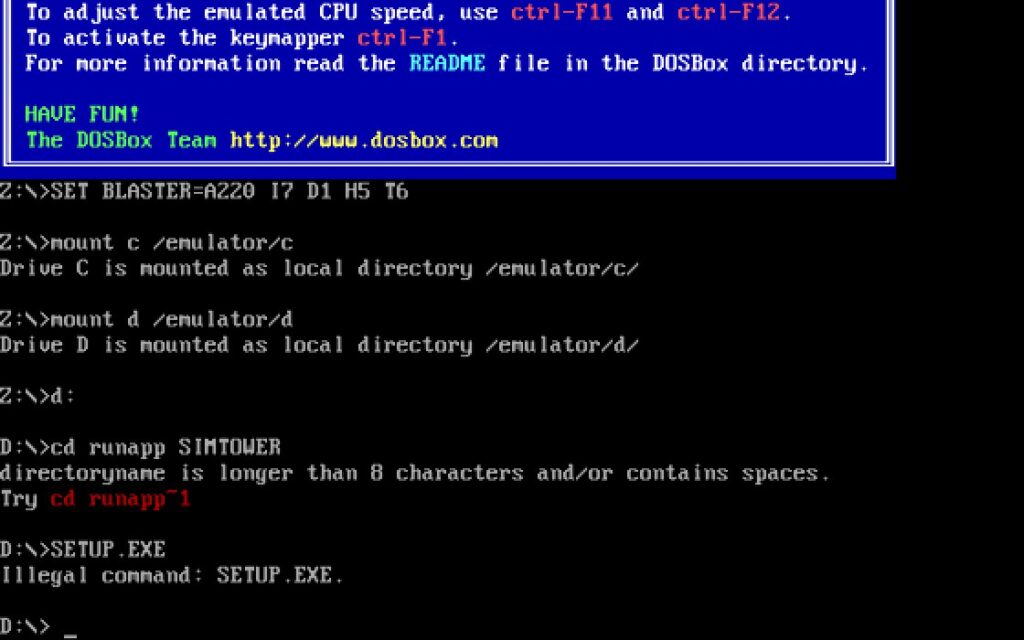
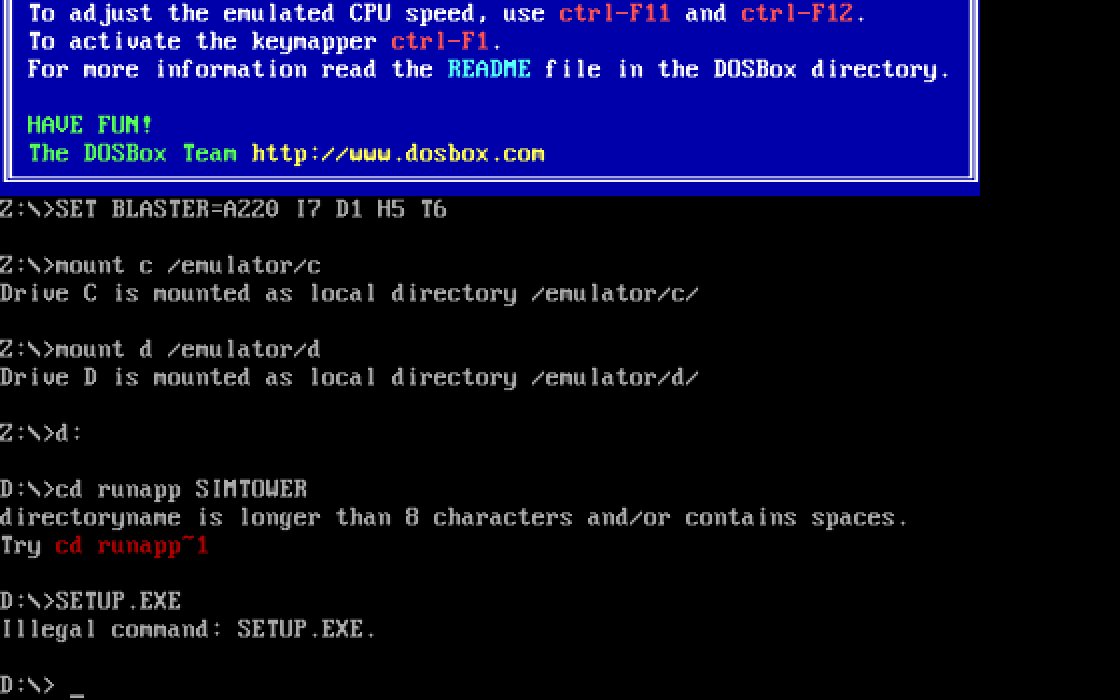
SimTower is a commercial title, so check GOG or Steam for an official re-release. If you’re running an original copy, mount the folder with mount c c:\games\simtower, switch to it with c:, and launch the EXE. Our DOSBox setup guide covers cycle and sound settings if you need them, and if simulation games are your thing, our free DOS games roundup has a few more worth trying.
Watch Gameplay
You might also like: