Gary Grigsby and Keith Brors Build a Granular Wargame
Steel Panthers, designed by Gary Grigsby and Keith Brors and released by SSI in 1995, simulates squad and vehicle-level combat across the major theaters of World War II, from the deserts of North Africa to the frozen fronts of the Eastern campaign. It’s built on a hex-grid system reminiscent of the Panzer General line, but with a far more granular, simulation-driven approach that lets you command individual tanks, guns, and infantry squads rather than abstracted formations.
It was named the best wargame of 1995 by multiple publications, including Computer Gaming World and PC Gamer US, and that critical reception helped drive a long-running series of sequels and a huge amount of community-made scenario content. Few tactical wargames from the period earned that level of consistent critical praise across so many outlets, and the recognition helped cement SSI’s reputation in the wargaming space well beyond its AD&D catalog.
Squad and Vehicle-Level Combat
You command a battalion-sized force of tanks, infantry squads, artillery, and support vehicles in scenario-based engagements on a hex map with detailed terrain effects. Line of sight, cover, suppression, and morale all factor into whether an attack succeeds, and losing well-trained units in a campaign has lasting consequences for later battles.
The sheer number of vehicle and weapon types modeled is a big part of the appeal – specific tank variants, artillery pieces, and small arms all behave differently based on real-world characteristics, giving the game a level of granularity that its Panzer General cousin never attempted. Weather conditions can also affect a scenario, adding another variable to account for before committing to an attack.
Tips for Your First Battles
- Use infantry to spot for artillery rather than relying purely on tanks – indirect fire support can break up entrenched positions your armor would struggle with directly.
- Suppress before you assault; a squad under fire is far less dangerous than one at full readiness, so soften a position before sending units into close range.
- Watch terrain carefully – cover and line of sight matter more here than in most wargames, and an exposed advance across open ground gets punished quickly.
- Protect experienced units; veteran crews perform noticeably better than green replacements, and losing them in a campaign has knock-on effects for later scenarios.
- Don’t split your force too thin early on; concentrated firepower against a single flank usually beats spreading pressure evenly across the whole line.
A Legacy That Outlasted the Sequels
Steel Panthers’ influence can be traced through decades of tactical wargames that followed, and its scenario editor gave rise to a modding community that kept new content flowing for years after SSI moved on to sequels – some of that fan-made content is still floating around today. It remains one of the most respected tactical WWII wargames ever made, prized specifically for its granular unit-level combat and the sheer amount of historical detail packed into its vehicle and weapon rosters.
That community longevity is unusual for a game this old, and it speaks to how well the underlying scenario format held up – new content kept being playable on the same engine for years without requiring any real changes to the core game. Even now, dedicated fan sites keep archives of custom scenarios covering theaters and battles the original release never touched.
Where the Series Went Next
Steel Panthers spawned direct sequels covering different theaters and eras, and the franchise continued well past its DOS roots into freeware and fan-maintained versions that are still being tinkered with today, a rare afterlife for a mid-90s tactical wargame.
Realism Without Overwhelming Complexity
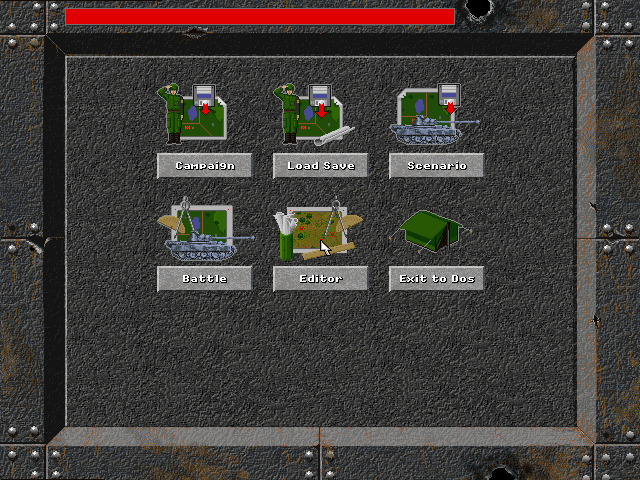
What impresses me most about Steel Panthers is how it manages genuine simulation-level detail – individual crew members, ammunition types, and vehicle facing all matter – without burying the player in menus the way some hardcore wargames do. The interface keeps the important information visible at a glance, so you’re making tactical decisions rather than fighting the UI to figure out what’s happening on the battlefield.
My one real criticism is the campaign structure’s pacing; a full campaign can run long, and the game doesn’t always do a great job signaling how much a single battle’s outcome will matter down the line, which can make early losses feel more consequential in hindsight than they seemed at the time. Newcomers should probably start with a single standalone scenario before committing to a full campaign, just to get a feel for the pacing first.
Sourcing a Copy
New to DOSBox? Our setup guide covers everything you need before commanding your first battalion.
Steel Panthers is a commercial title and is not legally available as a free download. Look for official re-releases on GOG or Steam.
DOSBox Performance Notes
To run Steel Panthers today, mount the folder holding your game files as a virtual drive with mount c [folder], switch to it using c:, and launch the game’s EXE. The scenario and campaign files are lightweight, so most modern systems will run it at full speed with default DOSBox cycle settings; consult our setup guide if you need to adjust sound or CPU emulation, particularly if you’re running larger, unit-heavy scenarios downloaded from the community.
See It in Action
You might also like: