Cryo’s Prehistoric Fantasy
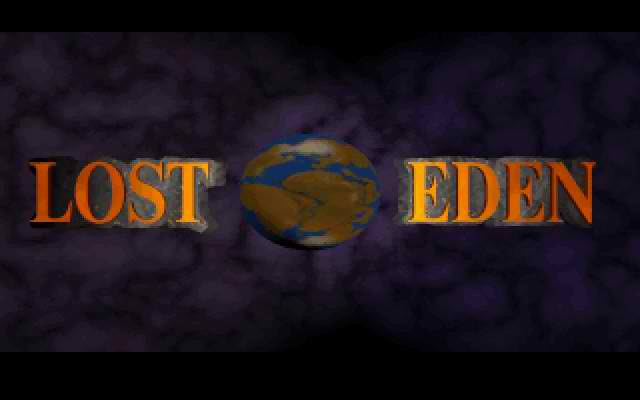
Humans and dinosaurs living side by side isn’t a new idea in fiction, but Cryo Interactive built an entire adventure game around it with real care in 1995. Lost Eden was developed by Cryo and published by Virgin Interactive for MS-DOS, with additional versions for Macintosh, 3DO, and CD-i. Set in an alternate prehistoric past, it tells the story of Adam, prince of Mo, who grew up isolated from the wider world after his mother and sister were killed by the forces of the tyrannical Moorkus Rex. The game came from the studio behind the acclaimed Dune adaptation and Megarace, and it was praised on release for its graphics, music, and heavy use of full-motion video cutscenes, alongside its distinctive prehistoric fantasy setting.
Choosing an entirely invented prehistoric setting rather than adapting an existing franchise gave Cryo more creative freedom than a licensed project would have allowed, but it also meant the team had to sell the premise entirely on its own merits, with no existing fan base or brand recognition to lean on going in.
Steve Jackson’s Fingerprints on the Story
Cryo brought in Steve Jackson, the Fighting Fantasy gamebook author and Lionhead co-founder, to contribute to the design, and that involvement shows in how much attention the game gives to Mo’s world-building. You explore as Adam from a first-person perspective, traveling between richly illustrated locations to gather information, recruit allies, and uncover the secret his grandfather once held about uniting humans and dinosaurs. Points of interest are navigated through a menu-driven interface rather than a traditional inventory-heavy puzzle structure, which keeps the focus on story and atmosphere rather than object-combination logic.
Tips for a Smoother First Playthrough
- Approach Lost Eden expecting a narrative journey rather than a puzzle box — the menu-driven navigation means there’s less object-hunting than a typical adventure, so don’t waste time searching for inventory combinations that simply don’t exist.
- Talk to every dinosaur character you meet more than once. Each tribe represents a distinct culture within Mo’s world, and their dialogue often develops as the story advances in ways a single conversation won’t reveal.
- Let the FMV cutscenes play out fully rather than skipping them — a good portion of the plot and world-building lives in these sequences rather than in interactive text you can reread later.
- If you’re stuck, look for a character you haven’t recruited yet rather than assuming you’re missing an item; recruitment and alliance-building drive progress here more than inventory puzzles do.
Lost Eden vs. Dune
Cryo’s earlier Dune adaptation built its reputation on adapting a dense, pre-existing science fiction universe with real fidelity. Lost Eden takes the opposite approach, building an original prehistoric fantasy world from scratch, but it carries over the same cinematic instincts — heavy FMV use, atmospheric pacing, and a preference for immersion over puzzle density. If Dune proved Cryo could adapt someone else’s universe well, Lost Eden proved they could build their own just as effectively, which is arguably the harder trick for a young studio to pull off convincingly.
Legacy: Cryo’s Signature Style, Fully Formed
Even players who bounce off the thin puzzle design tend to come away remembering the world of Mo vividly, which is exactly the trade Cryo was betting on when it prioritized atmosphere this heavily over mechanical depth.
Lost Eden is often held up alongside Dune as one of the two clearest examples of what made Cryo distinctive in the mid-90s adventure landscape: heavy pre-rendered production values in service of atmosphere and world-building rather than puzzle complexity. The studio would keep chasing that formula through the rest of the decade with games like the Egypt series, for better and worse, and Lost Eden’s reception at the time helped validate that this was a viable identity for Cryo rather than a one-off experiment. It’s not a game that spawned direct imitators, but it’s a strong example of a studio’s house style expressed with real confidence.
CD-ROM Setup Notes for DOSBox
Copy the installed game to a folder, mount it in DOSBox with mount c [folder], switch to that drive with c:, and launch the executable. Since Lost Eden relies heavily on CD-ROM video playback, our DOSBox guide’s notes on CD-ROM mounting are especially useful for getting cutscenes running smoothly, and our free DOS games list is worth browsing if you want something less FMV-dependent to fall back on.
The Verdict
Lost Eden stands out for its unusual prehistoric fantasy premise and Cryo’s signature cinematic presentation, carrying forward the atmospheric strengths that made Dune such a memorable adaptation. Its blend of world-building, dinosaur culture, and heavy FMV storytelling makes it one of the more visually ambitious adventure games of the mid-90s CD-ROM era. Where it falls short is puzzle substance — players who want genuine object-based challenges will find the menu-driven structure thin, and the pacing occasionally drags between story beats, especially once the novelty of talking dinosaurs settles in and the plot needs to carry more of the weight on its own.
If you go in wanting atmosphere and world-building over difficulty, though, it’s a memorable trip. Few other games from this era commit as fully to a strange premise and simply let it be strange, without constantly winking at the player about how unusual the setting is, and that sincerity is a big part of why it still lingers in memory decades later.
Watch Gameplay
You might also like: