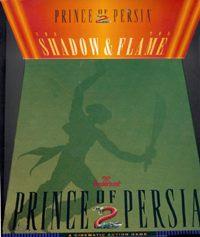
Sequels to beloved games usually play it safe. Prince of Persia 2: The Shadow and the Flame did the opposite — Jordan Mechner came back in 1993 and made something bigger, meaner, and considerably less forgiving than the original.
Jordan Mechner Raises the Stakes
Developed by Jordan Mechner with Broderbund Software, Prince of Persia 2 picks up right where the original left off: having defeated the vizier Jaffar and rescued the princess, the Prince is framed by a demonic doppelganger and thrown out of the palace he just saved. What follows is a journey across desert kingdoms and increasingly surreal magical realms to reclaim his identity and destroy the Shadow wearing his face. It’s a considerably more mythological, less contained story than the original’s single-palace setting.
That ambition shows in places both good and bad. The sequel is more expansive in scope than the tightly bounded original, but also less rigorously controlled in its pacing, with stretches that feel like they’re chasing scale for its own sake rather than the first game’s more disciplined minute-to-minute design. It’s still recognizably built on the same rotoscoped-animation foundation and the same careful, weighty sense of physicality, even where the larger, more sprawling level design pulls in a slightly different direction than the original’s tightly self-contained palace.
A Doppelganger, a Desert, and a Flame
The sequel keeps the rotoscoped animation and weighty, physical movement that made the original feel so distinct, but scales the world up dramatically — levels are much larger, frequently spanning several connected screens rather than the original’s tighter, self-contained rooms. New hazards like fire barriers and magical doors join the returning spike pits and guillotines, and combat gets more varied, with some opponents demanding hit-and-run tactics instead of the straightforward one-on-one sword duels the first game trained you for.
Where the Difficulty Spikes (and How to Handle It)
- Expect longer falls and trickier timing than the original — the larger, multi-screen levels mean a single mistimed jump can cost you far more backtracking than it would have in Prince of Persia 1.
- Learn each new enemy type’s attack pattern before engaging; a few of the sequel’s fighters punish the original game’s “block and counter” habits badly.
- Save states or level passwords (depending on your version) are worth using liberally — this is a harder game than its predecessor, and there’s no shame in leaning on them.
- Watch for environmental cues around fire barriers and magical doors before rushing through a room; several deaths come from treating new hazards like the old, familiar ones.
- Take advantage of the larger, multi-screen level layouts by scouting a room fully before committing to a jump sequence — the extra screen space often hides an easier route than the first path you spot.
Comparing It to the Original Prince of Persia
Where the first Prince of Persia was tightly scoped and relatively forgiving once you learned its rhythm, the sequel trades that accessibility for scale and atmosphere. Visually, it’s a real step up too — the backgrounds are more detailed and painterly than the original’s spare dungeon corridors, giving the desert ruins, magical caves, and shadow realms a sense of place the first game never really attempted. That ambition came at a cost at launch: the increased difficulty earned it a decidedly mixed reception from players expecting more of the same forgiving platforming. Compared to contemporaries like Flashback or Another World, which pursued similarly cinematic, rotoscoped movement around the same period, Prince of Persia 2 stays closer to pure platforming challenge rather than leaning into puzzle-driven pacing, which makes its difficulty spikes land harder since there’s less variety to break up the pattern of jump, dodge, and fight.
What I Love, What Frustrates Me
The atmosphere here is genuinely stunning — the shift from desert ruins into magical caves and eventually ominous shadow realms creates a sense of wonder the tightly-bounded original never had room for, and the final stretch of the game in particular still impresses. My honest criticism is that the difficulty spike isn’t always fair; a handful of jumps and traps feel designed around trial-and-error memorization rather than readable danger, and that can turn an otherwise thrilling platformer into a frustrating one for stretches at a time. It’s a game I respect more than I always enjoy moment-to-moment, but the highs are worth pushing through the rough patches for. The soundtrack and sound design deserve a mention too — the ambient audio in the shadow realm sections in particular does a lot of quiet work building dread without leaning on cheap jump scares, which was a genuinely mature choice for a 1993 action-platformer. It’s a sequel that took real risks, and even where those risks don’t fully pay off, the ambition is worth admiring on its own terms. Play the original first if you haven’t, but don’t skip this one — it’s the more ambitious, more interesting half of the story.
Running It in DOSBox
Prince of Persia 2 is a commercial title, so you’ll need a legitimate copy, whether an original disk set or an official re-release. New to DOSBox? Our setup guide covers installation and configuration. Once you have your files, mount the folder, switch drives, and run PRINCE2.EXE. If the game feels too fast or the animation looks jerky, adjust DOSBox’s CPU cycle count rather than the in-game speed settings — Mechner’s rotoscoped animation is timing-sensitive and benefits from getting emulation speed close to period-accurate.
Watch Gameplay
You might also like: