One game, two secret agents
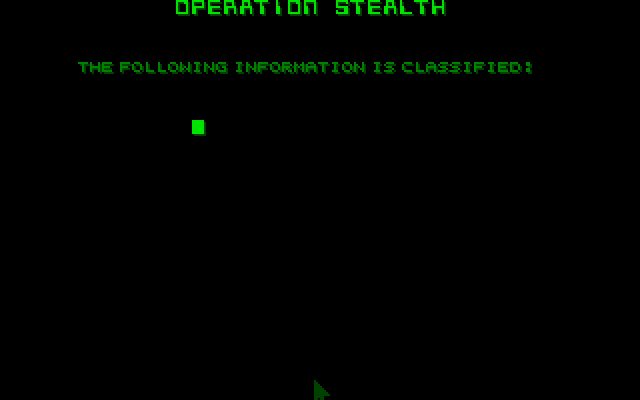
Operation Stealth, released by Delphine Software International in 1990, runs on the same Cinematique Evolution engine that powered Future Wars, but it’s best known for a genuine oddity in its release history. In Europe the game starred an original secret agent named John Glames and was published under the Operation Stealth title; in North America, Interplay Productions released a reworked version under license as 007: James Bond – The Stealth Affair, swapping in the official Bond character while keeping the plot and puzzles largely intact.
Either version follows a CIA operative dispatched to Latin America after a top-secret stealth aircraft prototype, the F-19, is stolen from a US naval base. The plot moves you through jungle hideouts, underwater caverns, and enemy strongholds in pursuit of the missing plane, wrapping Cold War-era spy fiction around Delphine’s now-familiar point-and-click framework, and giving the studio’s second adventure a noticeably higher-stakes, more globe-trotting scope than its debut.
Espionage, then a mad dash for air
Operation Stealth keeps the icon-driven interaction system from Future Wars, letting you examine, take, and use objects while conversing with a colorful cast of informants and villains. Investigation and dialogue drive most of the game, with you piecing together the aircraft’s location through a mix of espionage and old-fashioned legwork.
Where Operation Stealth diverges from Delphine’s earlier adventure is its handful of action-driven interludes: an overhead maze sequence, a tense underwater escape with a limited air supply, and other timed set pieces that break up the pure puzzle-solving. These moments give the game a more varied rhythm than a typical point-and-click title of the era, closer in spirit to a spy thriller than a straight mystery, and they’re the parts most likely to catch first-time players off guard if they’re expecting a purely cerebral experience.
The globe-trotting plot structure is also worth calling out. Rather than confining you to a single town or building the way a lot of contemporary adventures did, Operation Stealth moves you through genuinely distinct locations tied to the aircraft-recovery plot, giving the game a sense of scale and momentum that its predecessor, tied to a single time-traveling protagonist bouncing between eras, didn’t quite have in the same way.
Getting through the action sequences
- Before attempting the underwater escape, make sure you’ve picked up any air-related items available earlier – the sequence runs on a strict timer, and going in unprepared usually means restarting.
- Map the overhead maze section mentally, or on paper, rather than relying on trial and error; it’s laid out consistently and rewards planning over blind wandering.
- Save immediately before any timed set piece. Operation Stealth doesn’t warn you clearly when you’re entering one, and losing progress on a long puzzle sequence to a sudden failure state is a common frustration.
- Don’t neglect conversation options with informants just because the plot feels action-focused; a lot of practical information about the timed sequences is delivered through dialogue beforehand.
Delphine’s most ambitious adventure yet
Operation Stealth shows Delphine expanding on the formula they established with Future Wars, mixing classic adventure logic with action sequences that keep the pace brisk. The Bond-licensed American release also makes it an interesting curiosity for anyone tracking how European adventure games were repackaged for the US market in the early nineties – playing the two versions side by side is a neat window into how much a license can reshape the surface of a game without touching its bones.
My honest take: the action sequences are a mixed bag – when they work, they give the game a pulse that Future Wars didn’t have, but the underwater escape in particular can feel more like memorization than genuine problem-solving on a first attempt. Fans of spy fiction, Cold War thrillers, or Delphine’s other adventures will still find plenty to like in its globe-trotting plot and varied set pieces, provided they’re willing to mix careful observation with quick reflexes during the action beats. It’s a natural next stop after Future Wars for anyone who enjoyed that game’s interface and wants to see Delphine push it toward higher stakes.
It’s also worth seeking out both regional versions if you’re curious about game localization history. Comparing the European John Glames release against the American Bond-licensed cut is a genuinely interesting look at how much dialogue, framing, and character identity a publisher could swap out while leaving the underlying puzzles and pacing almost completely untouched. It’s a small piece of licensing history that most players never think to go looking for, but it says a lot about how flexible a well-built adventure game engine could be, and how much of a game’s identity can live entirely in its writing and framing rather than its underlying systems and puzzles alone, which stay essentially identical between both cuts.
Where to find the mission files
First time with an emulator? The DOSBox guide on this site gets you from download to running game.
Operation Stealth is a commercial title and is not legally available as a free download. Look for official re-releases on GOG or Steam.
Prepping DOSBox for the mission
If you own a legitimate copy, mount the folder containing your game files with mount c [folder], switch to that drive with c:, and run the EXE. Like Future Wars, Operation Stealth is also supported by ScummVM’s Cine engine, which can be a simpler option if you’d rather not fine-tune DOSBox settings by hand. See our DOSBox guide for full configuration details either way.
Stealth Footage
You might also like: