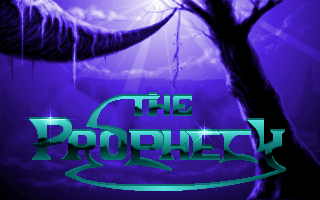
In 1992, most PC adventure games were happy to let you wander for as long as you liked. Ween: The Prophecy set the clock running instead.
A European Adventure With a French Accent
Ween: The Prophecy came out of Coktel Vision, the French studio best known for the Gobliiins series and Lost in Time, working alongside MDO. It launched first across Europe for MS-DOS, Amiga, and Atari ST before Sierra On-Line picked it up for North American release the following year. The setting is the fantasy Kingdom of Blue Rocks, where players step into the role of Ween, a good wizard racing to stop the sorcerer Kraal from seizing power during a rare celestial event called the Great Eclipse.
Three Quests, One Hourglass
The entire game is built around a ticking clock: Ween has three days to complete three separate quests, each rewarding him with a grain of sand for the Revuss hourglass he needs to fill before the eclipse arrives. That structure forces different pacing than the open-ended wandering common to Sierra and LucasArts adventures of the same period — you’re not exploring for exploration’s sake, you’re working against a deadline. Each of the three quests also sends Ween to a distinct region of the Kingdom of Blue Rocks, giving the world a sense of geographic variety despite the tight overall structure, and each area introduces its own small cast of characters tied to that particular leg of the journey.
Playing Efficiently Under Pressure
- Treat each of the three quests as a self-contained puzzle box — finish what you can in one area before backtracking, since the clock doesn’t pause while you think.
- The icon-driven interface strips out verb menus, so when you’re stuck, cycle through every available icon on an object rather than assuming only one action applies.
- Full-motion cutscenes can’t be skipped on some releases, so budget real time for them if you’re racing the in-game clock.
- Failure states are tied to the eclipse deadline rather than instant deaths, so it’s safer to experiment with items than in many contemporary Sierra adventures.
How It Stacks Up Against Coktel’s Other Work
Fans of Gobliiins will recognize the streamlined, icon-based interface immediately, but Ween trades that series’ puzzle-box level design for a single continuous quest with real narrative stakes. It’s also worth setting alongside Sierra’s own Colonel’s Bequest and The Dagger of Amon Ra, two other early-90s adventures built around a countdown clock — Ween’s time pressure is gentler than Laura Bow’s hour-by-hour tracking, but the tension it creates comes from a similar place. Coktel Vision would go on to build Lost in Time around a similarly clock-driven structure, which makes Ween feel like an early trial run for ideas the studio kept refining across the rest of the decade.
Sierra’s decision to publish Ween in North America is itself worth noting. Sierra rarely picked up outside European adventures for its own label, and doing so for Ween signals how much attention Coktel Vision’s design sensibility — simplified interface, strong art direction, family-friendly fantasy tone — had earned by the early 90s, even before the Gobliiins series had fully broken out internationally.
MDO’s co-development credit is also worth noting, since the studio isn’t as widely documented as Coktel Vision itself. The partnership speaks to how European adventure development in this period often involved smaller collaborative arrangements between studios, rather than the more siloed single-developer model that became standard later in the decade.
A Note on Getting a Legal Copy
Ween: The Prophecy has never been released for free — it’s a commercial title, so your best bet is tracking down an official re-release on GOG or Steam rather than searching for an abandonware download. If you haven’t configured DOSBox before, our complete setup guide walks through everything you need to get started.
The Amiga and Atari ST versions that preceded the DOS release are worth a mention too, since Ween originally launched across all three platforms roughly together — a reminder of how fragmented the European PC and home computer market still was in the early 90s, well after MS-DOS had become dominant in North America.
Running It Smoothly in DOSBox
With a legitimate copy in hand, mount the folder as your C: drive, switch to it, and launch the EXE as usual. Because Ween relies so heavily on full-motion video for its story beats, stuttering playback is the most common complaint — check your CPU cycles and sound card emulation settings first if the cutscenes chop.
Kraal himself is a fairly conventional villain by fantasy adventure standards, but the game wisely keeps him mostly offscreen and looming rather than over-explaining his motivations, which suits the tight three-day structure better than a more elaborate villain backstory would have.
Where I Land on Ween
What I appreciate most about Ween is how confidently it commits to its own gimmick — the three-day structure genuinely changes how you approach the game compared to a typical point-and-click adventure, and the FMV sequences, however primitive by later standards, gave it a cinematic ambition few European adventures matched in 1992. The downside is that the same time pressure that makes it distinctive can also make it stressful in a way modern players used to more relaxed adventure pacing might not enjoy, and a couple of the quest-complete-or-fail states aren’t always clearly telegraphed before it’s too late to recover. Save frequently and treat every quest branch as a checkpoint rather than trusting the game to warn you before a mistake becomes permanent.
See the Eclipse Countdown in Action
You might also like: