Most trilogies end with the hero. Kyrandia ends with its clown.
Closing a Trilogy by Switching Sides
Developed by Westwood Studios and published by Virgin Interactive in 1994, Malcolm’s Revenge closes out the Legend of Kyrandia series that began with the original Legend of Kyrandia and continued through Hand of Fate. Rather than returning to Brandon or Zanthia, the series’ first two protagonists, Westwood handed the keyboard to Malcolm, the deranged jester who spent the first game as its villain. After escaping the imprisonment Brandon left him in, Malcolm sets out across Kyrandia chasing his freedom and a healthy dose of revenge. Westwood came into this project already established as one of the era’s most technically capable studios, having just shipped Dune II, and it carried that production polish into what is a much stranger, funnier game than either of its predecessors.
Playing a Jester With a Fractured Mind
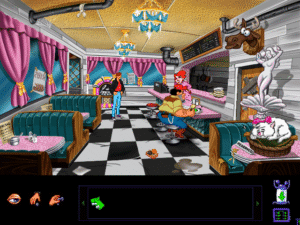
The point-and-click structure is familiar Kyrandia: explore hand-painted screens, gather items, and solve environmental puzzles without a verb list cluttering the interface. What’s different is Malcolm himself. His years of solitary confinement left him more than a little unhinged, and the game leans into that by giving him three distinct dispositions — good, evil, and neutral — that the player steers him toward over the course of the adventure.
The Alignment System, and Why It Matters
This is the mechanic that separates Book Three from nearly every other adventure game of its generation. Depending on which alignment Malcolm leans toward, dialogue options change, certain puzzle solutions open up or close off, and entire story branches play out differently. A few things worth knowing going in:
- Your alignment isn’t locked in permanently at the start — specific choices throughout the game can shift it, so pay attention to how NPCs react to you.
- Because puzzle solutions differ by alignment, a walkthrough written for the “evil” path may leave you stuck if you’re playing “good,” so double-check that any hints you look up match your Malcolm.
- Malcolm can’t die the way Brandon could in the first Kyrandia game, which makes this a much friendlier game to experiment in without fear of a sudden reload.
- Replaying with a different alignment is genuinely worth it — large stretches of dialogue and some puzzle logic simply don’t repeat.
Where This Fits Among Westwood’s Adventures
Compared to the more straightforwardly heroic tone of the earlier Kyrandia games, Malcolm’s Revenge trades in darker comedy and a morally slippery protagonist, closer in spirit to what LucasArts was doing with anti-heroes like Guybrush Threepwood than to Brandon’s fairly conventional hero’s journey. It’s also more structurally ambitious than most branching-choice adventures of 1994, which tended to offer the illusion of choice rather than genuinely different playthroughs. Westwood was, at the same time, deep into building the Command & Conquer series that would come to define the studio commercially, which makes Malcolm’s Revenge something of a last hurrah for the more experimental, narrative-driven side of Westwood’s output before real-time strategy took over the company’s focus.
The writing deserves particular credit here. Malcolm narrates much of his own journey with a self-aware, sardonic voice that’s genuinely funny independent of the alignment system, and the supporting cast he meets reacts to his reputation as the first game’s villain in ways that range from terror to grudging respect depending on how he’s chosen to behave. It’s a smarter use of series continuity than simply cameoing familiar faces for nostalgia’s sake.
Virgin Interactive’s publishing relationship with Westwood spanned the whole Kyrandia trilogy, and by the time Malcolm’s Revenge shipped, the partnership had clearly built enough trust for Westwood to take real narrative risks with the closing chapter rather than playing it safe with a more conventional heroic sequel.
Buying Your Ticket Back to Kyrandia
Never configured DOSBox before? Our complete setup guide covers the essentials, and our best free DOS games roundup is worth a browse if you want to sample more of the era while you wait.
It’s also worth noting that Book Three arrived in a year absolutely stacked with major adventure releases, and competing against a crowded mid-90s adventure game landscape for player attention likely didn’t help its commercial visibility much, whatever its creative merits.
Getting Malcolm Running in DOSBox
Once installed from GOG, the game runs smoothly in DOSBox with the standard setup: mount your install folder as C: with mount c [folder], switch to it with c:, and start the game’s EXE. If the MIDI soundtrack sounds thin, try switching your sound card emulation to General MIDI or Sound Blaster 16 rather than the default OPL synth.
Should You Play the Trilogy in Order First? My Verdict
I’d still recommend playing the first two Kyrandia games before this one — Malcolm’s Revenge assumes you already know who he is and why players might not trust him, and that context makes his redemption, or lack of it, land harder. On its own merits, though, this is one of Westwood’s most inventive adventure games, and the alignment system alone makes it worth a look even if you skip straight to it. The one real knock against it: puzzle logic on the “evil” path in particular can get needlessly obscure, and without a clear read on your own alignment, first-time players can end up wandering between paths without realizing it, which muddies the replay value the whole system is built around.
Watch Malcolm’s Story Unfold
You might also like: