Ask any longtime X-COM player which game in the series broke them, and there’s a good chance the answer involves a Lobsterman coming through a bulkhead. Terror from the Deep, MicroProse’s 1995 follow-up to X-COM: UFO Defense, took a beloved formula and made it meaner in almost every way that matters.
Same engine, much colder water
Built on the same underlying framework as UFO Defense, Terror from the Deep swaps the original’s alien-invasion-from-the-skies premise for an underwater one. You’re still running a multinational defense organization, still managing bases, research, and a roster of soldiers, but now your interceptors are submarines and your battles often play out on the ocean floor instead of open ground. It’s a direct sequel in every mechanical sense, which is both the game’s biggest strength and its most common criticism — a lot of the visuals and systems feel closer to a reskin than a full reinvention, and reviewers at the time noted as much.
What’s actually new underwater
Underwater tactical missions come with their own movement and visibility rules, and the enemy roster reflects the new setting: Aquatoids replace Sectoids as the base-line alien threat, and Gillmen and the notoriously tough Lobstermen show up as the campaign escalates. Your transport craft, the Triton, and your Manta-class interceptors take over from the original’s Skyranger and Interceptor. The tech tree has been reshuffled around this new setting, moving from conventional weapons toward sonic-based technology as research progresses, but the core X-COM loop — geoscape strategy layered over turn-based squad combat — is fully intact and just as addictive as it was the first time around.
Base building underwater also changes the strategic calculus a little. Facility placement and construction costs feel a touch different from the land bases of the original game, and defending a submerged base against an assault carries its own tension that the original never quite replicated.
Getting through the early game alive
- Don’t skimp on base defenses early. Underwater bases are just as vulnerable to being overrun as land ones were in the original, and losing a base wipes out everything stored there.
- Lobstermen have serious armor; conventional weapons struggle against them, so don’t be surprised if early firefights go badly and adjust your loadouts and research priorities accordingly.
- Research aggressively rather than defensively. Falling behind on the tech tree here is punished harder than it was in UFO Defense, since enemy strength ramps up quickly.
- Keep soldiers close together during underwater missions. Visibility is worse than on land, and isolated units get overwhelmed fast by enemies you never saw coming.
- Prioritize sonic weapon research once it becomes available; the jump in effectiveness over early conventional gear is significant enough to justify the detour.
How it stacks up in the series
Compared to UFO Defense, this is X-COM with the safety rails removed — harder aliens, a steeper curve, and a lot less room for mistakes. Compared to what came after, X-COM: Apocalypse in 1997 tried something more structurally ambitious, with a single sprawling city instead of a global map, and is generally seen as the more experimental entry in the series. Terror from the Deep sits in between: a game that doubled down on what made the original great without doing much to reinvent it, for better and for worse depending on what you’re looking for.
My honest take
I love this game and I resent it in roughly equal measure. The atmosphere of the ocean-floor missions is genuinely tense in a way land combat in the original never quite matched, and figuring out how to deal with Lobstermen for the first time is a real “oh no” moment that sticks with you. But the difficulty spikes can tip into unfair territory, especially once Terror missions ramp up, and newcomers who haven’t played the original first are going to have a rough time adjusting. If you’ve already beaten UFO Defense and want more, this delivers in spades. If you haven’t, start there instead and come back to this once you know what you’re getting into.
The reputation it earned among fans
Ask X-COM fans to rank the classic-era games and Terror from the Deep tends to land in a very specific spot: respected, occasionally beloved, but rarely called anyone’s favorite outright. Part of that comes down to timing — it followed one of the most acclaimed strategy games of the decade, and any direct sequel to something that good was always going to be measured against an unfair bar. The other part comes down to genuinely brutal design choices, particularly around psionic attacks later in the campaign, that even devoted fans will admit go a step too far into frustration rather than challenge.
And yet it’s still played, still modded, and still recommended by people who finished UFO Defense and wanted more of the same tension with the dial turned up. That’s a strange kind of legacy — not universally loved, but stubbornly persistent, which in its own way says as much about the strength of the underlying X-COM formula as a five-star review ever could.
Setting it up with DOSBox
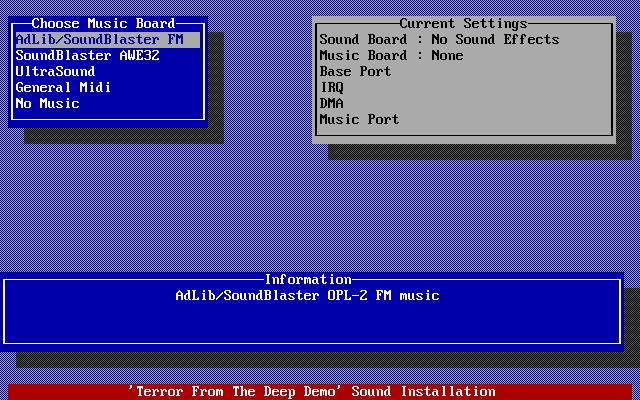
Mount the game folder with something like mount c c:\games\tftd, switch to it with c:, and launch the EXE. Turn-based tactical combat runs fine at modest cycle counts, so you don’t need to push DOSBox hard here; if you haven’t configured DOSBox before, our DOSBox setup guide covers what you need. Prefer something a bit gentler for your next pick? Our free DOS games list has plenty of lower-stakes options.
Watch Gameplay
You might also like: