Resident Evil owes more to this trilogy’s closing chapter than most horror fans realize.
Infogrames Closes Out the Original Trilogy
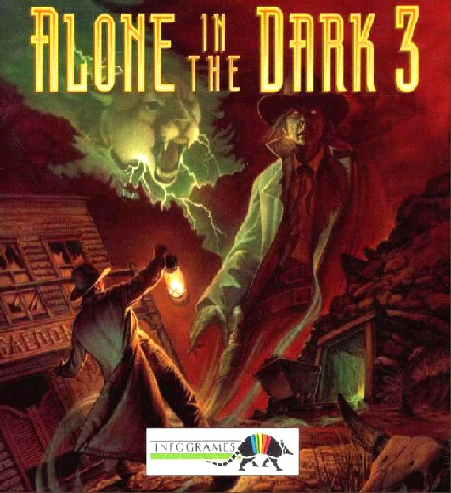
Alone in the Dark 3 was developed and published by Infogrames in 1994 for MS-DOS, with Interplay Entertainment handling North American distribution. It’s the third entry starring detective Edward Carnby, this time investigating a ghost town called Slaughter Gulch after a young girl goes missing, trading the gothic mansion setting of the first two games for a supernatural Wild West backdrop.
Fixed Cameras, Tank Controls, and a Haunted Town
Players control Carnby from fixed, cinematic camera angles as he explores dilapidated saloons, mines, and haunted structures, collecting items, solving environmental puzzles, and managing a limited arsenal of period-appropriate weapons against supernatural threats. The tank-style controls and deliberate pacing that defined the series continue here, emphasizing tension and careful exploration over fast action. Period-accurate weapons like six-shooters and rifles feel meaningfully different from the candlesticks and improvised tools of the earlier mansion-set games, giving Slaughter Gulch its own distinct combat identity within the trilogy.
Surviving Slaughter Gulch
- Conserve ammunition aggressively — resource management matters more here than in most contemporary adventure games, and running dry mid-encounter is a common way to lose progress.
- Use the environment strategically against ghosts and monsters rather than relying purely on your weapons; the game’s design rewards thinking spatially.
- The more open, town-based layout means it’s easy to miss items tucked into side buildings — back out and re-explore areas you’ve already passed through before pushing forward.
- Fixed camera angles can obscure threats just off-screen, so move cautiously into new rooms rather than sprinting through them.
- Save often and in multiple slots — the game’s tension comes partly from genuine risk of death, and a single save file can leave you stuck if a fight goes badly.
A Direct Line to Later Survival Horror
The original Alone in the Dark pioneered the combination of fixed camera angles and real-time 3D polygonal characters over pre-rendered backgrounds, a formula Capcom has openly credited as an influence on the original Resident Evil two years later. Playing this third entry with that lineage in mind makes its Wild West detour feel less like a genre footnote and more like one of the clearest missing links between early PC horror and the console survival horror boom that followed.
The Wild West setting is a bigger creative swing than it might sound. By 1994, the first two Alone in the Dark games had built a specific gothic-mansion identity for the series, and swapping that for dusty saloons and abandoned mineshafts risked feeling like a completely different franchise wearing the same name. It mostly works because the underlying tension — isolation, limited resources, unseen threats just past the edge of a fixed camera — translates just as well to a ghost town as it does to a haunted house.
Infogrames’ willingness to keep experimenting with the series’ setting rather than repeating the original mansion formula a third time is itself notable. By 1994 the survival horror template Alone in the Dark had pioneered was still relatively fresh, and taking that formula somewhere as tonally different as a supernatural Wild West ghost town was a genuine creative risk for a series still establishing its identity.
It’s also worth noting that Alone in the Dark 3’s ghost-town setting draws on a long tradition of American frontier horror storytelling, giving the game a distinctly different folklore well to pull from compared to the European gothic influences shaping the first two entries in the series.
Where to Buy the Trilogy Edition
New to configuring DOSBox? Our complete setup guide has the basics covered, and our list of the best free DOS games is a good detour if horror isn’t quite your mood today.
Interplay Entertainment’s handling of North American distribution also mattered for how widely the game reached players outside Europe, since Infogrames’ domestic French release and Interplay’s North American push effectively gave Alone in the Dark 3 two separate marketing pushes tailored to different regional audiences.
The trilogy’s cumulative influence is easy to underrate today simply because so many later games absorbed its ideas and moved past them; going back to play all three in sequence is the best way to really feel how much groundwork they laid for the genre that followed.
Configuring Sound and CD-ROM in DOSBox
If you’re playing an original DOS copy rather than the modern GOG release, mount the folder containing the game files as your C: drive, switch to it, and run the EXE from the DOSBox command line. Sound card and CD-ROM configuration both matter here for getting the atmospheric audio working correctly, so it’s worth double-checking those settings before writing off any missing sound effects as a broken install.
How the Trilogy’s Finale Holds Up
Alone in the Dark 3 caps off a trilogy that helped define survival horror years before the genre’s more famous console entries arrived, and its Wild West setting remains one of the more distinctive twists in the franchise’s history. My honest reservation: the tank controls and fixed cameras that felt cutting-edge in 1994 are a genuine adjustment for modern players, and the game doesn’t do much to ease that learning curve — expect some early frustration before the control scheme clicks. Push through that adjustment period, though, and the atmosphere it builds is still genuinely effective, which is more than can be said for a lot of horror games from the same decade.
Watch Carnby in Action
You might also like: