Half adventure game, half submarine simulator
Codename: ICEMAN, released by Sierra On-Line in 1990, casts you as a U.S. Navy officer thrust into a submarine-based Cold War thriller, and it does something few Sierra games attempted: it blends the studio’s traditional point-and-click adventure design with a lengthy, genuine submarine simulation segment. That combination makes it one of the more mechanically ambitious Sierra titles of its era, closer to two different games stitched together than a single consistent experience.
It arrived during Sierra’s prolific late-80s and early-90s run of adventure games, and it stood out for grounding its story in realistic naval procedure, echoing the same commitment to authenticity found in the Police Quest series. The plot follows a rescue mission that escalates into international intrigue, with your success dependent on both puzzle-solving and simulation skill in roughly equal measure.
Following orders, then flooding the ballast tanks
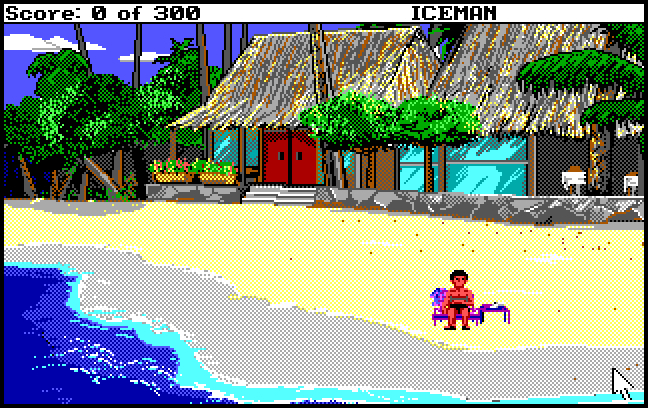
Codename: ICEMAN combines a text-parser adventure interface with dialogue-driven investigation, exploration, and puzzle solving typical of Sierra’s catalog at the time. You have to follow procedure carefully, from handling identification correctly to navigating military protocol, and mistakes are capable of derailing progress in ways that aren’t always immediately obvious.
A significant portion of the game is devoted to actually piloting a submarine, requiring you to learn and manage its systems in a simulation-style sequence that sits apart from the rest of the adventure entirely. This mix of genres makes Codename: ICEMAN a demanding, sometimes unforgiving experience, but one that rewards players willing to learn its systems and follow its procedural logic closely rather than treating it like a standard point-and-click game with extra steps.
It’s worth knowing going in that the submarine sections aren’t a brief minigame tacked onto an otherwise conventional adventure – they’re a substantial, sustained chunk of the experience, with their own controls, instruments, and failure states to internalize. Sierra clearly wanted players to actually feel like they were commanding a vessel rather than just clicking through a scripted sequence, and that ambition is admirable even when it makes the game harder to just casually pick up decades later without a bit of patience, and it’s a level of design ambition rarely attempted again in later adventure games, which alone makes it worth experiencing even if the tonal mix doesn’t fully click for every player who tries it.
The writing around the espionage plot holds up reasonably well too, favoring a slow build of tension and procedural detail over big action set pieces. It’s not trying to be a thriller in the modern blockbuster sense; it’s closer to a methodical Cold War novel translated into interactive form, and that patience is either going to click with you or feel slow depending on what you’re in the mood for.
Before you dive
- Take the submarine tutorial sections seriously, even if they feel slow – the simulation controls come up again later under time pressure, and you won’t have time to relearn them then.
- Follow military protocol literally in dialogue and procedure, even when it seems redundant; the game frequently tests whether you’re paying attention to rank and chain-of-command details.
- Save before any submarine piloting sequence specifically, separate from your regular adventure saves – simulation failures can end runs abruptly and unpredictably compared to the adventure portions.
- Keep notes on codes, coordinates, and names given during briefings; the game expects you to recall and reuse this information later without reminding you.
An outlier even among Sierra’s own catalog
Set next to Police Quest, which shares its commitment to procedural realism, Codename: ICEMAN pushes further into simulation territory that Police Quest never really attempts, trading some of that game’s investigative focus for hands-on systems management. Compared to Sierra’s more fantastical adventures like King’s Quest, it’s a completely different beast – there’s no whimsy here, just Cold War tension and a genuine expectation that you’ll master a submarine’s systems.
My honest take: the genre-blending is admirable and genuinely ahead of its time, but it also makes the game harder to recommend without reservation. The submarine sequences are a steep, sometimes frustrating learning curve dropped into the middle of what’s otherwise a fairly standard parser adventure, and the tonal whiplash between the two halves doesn’t always work. Still, it’s a fascinating piece of early-90s design history, and fans of Cold War military fiction with patience for a learning curve will get real value out of it, particularly anyone who already enjoyed the procedural rigor of Police Quest and wants to see Sierra apply that same instinct to naval warfare instead of street policing. Just go in knowing you’re signing up for two different games stapled together, not a single consistent experience throughout, and treat the tonal shifts as part of the appeal rather than a flaw to push through.
Tracking down a copy
Everything from installing DOSBox to tuning cycles is covered in our setup guide.
Configuring DOSBox for smooth sailing
After installing the game, mount its folder as your C drive in DOSBox, switch to that drive, and start the EXE. The submarine simulation sequences in particular are sensitive to DOSBox’s cycles setting; if the sub controls feel laggy or unresponsive during the piloting segments, that’s usually a cycles problem rather than a game bug. Our DOSBox setup guide linked above walks through configuring display, sound, and cycle settings for classic Sierra adventure titles.
Submarine Footage
You might also like: