By late 1991, SSI’s Advanced Dungeons & Dragons license had already produced one certified hit in the original Eye of the Beholder. Rather than leave a working formula alone, Westwood Associates went back into the sewers, the temples, and the character sheets and built The Legend of Darkmoon — a sequel that keeps everything that made the first game click while giving it a real story to hang the dungeon crawling on.
From Waterdeep’s Sewers to Darkmoon’s Depths
The plot picks up right after the party has put down the beholder Xanathar beneath Waterdeep. While the heroes recover, the archmage Khelben “Blackstaff” notices something wrong near Temple Darkmoon in the forests outside the city — disappearances, shallow graves, the kind of details that mean a much bigger problem is brewing. He teleports the party out to investigate, and that’s the last quiet moment you get for the rest of the game. Westwood Associates, the small studio behind both Eye of the Beholder games, would go on within a year to release Dune II and effectively invent the real-time strategy genre as we know it — it’s worth remembering that the team responsible for this tightly-designed AD&D dungeon crawl was about to pivot into something completely different.
Real-Time Combat Without a Map
Mechanically, EOB2 is a first-person, point-and-click dungeon crawler built on AD&D second edition rules, and it plays out in real time rather than turns — you can dodge a blow by physically stepping your party back a square, which turn-based contemporaries simply don’t allow. Parties of up to four choose from Fighter, Ranger, Paladin, Cleric, Mage, and Thief, and you can import a surviving party from the first game complete with levels and gear, or roll up fresh characters. There’s no automap. None. If you want to know where you’ve been in Temple Darkmoon’s twisting corridors, you’re drawing it yourself on graph paper, and the game is absolutely designed around that expectation.
What I Wish Someone Had Told Me Before I Started
- Start mapping from square one. The corridors reuse similar wall textures constantly, and relying on memory instead of a real map will get you turned around within the first few rooms.
- Don’t equip unidentified items just to see what they do. A shop or a knowledgeable NPC can identify things for you, and eating a curse because you wanted to skip that step is a rough way to lose a good weapon slot.
- Keep a Thief in the party. Locked doors and traps are common, and forcing your way through instead of picking the lock tends to cost hit points you’d rather keep.
- Because combat runs in real time, positioning matters more than fast clicking. Put your Fighter and Paladin up front and keep the Mage and Cleric tucked behind them — a squishy caster eating a hit in melee range can end an encounter badly.
- Resting isn’t free. It’s how you get spells back, but wandering monsters can interrupt a rest in the wrong spot, so clear a room out before you settle in.
- Don’t dump every early Mage spell slot into offense. A single memorized utility spell can save a rest cycle later, and with so few slots at low levels every choice matters more than it would in a game with generous mana pools.
- Watch your light sources. Darkness genuinely affects what you can see in the corridors, so carrying spare torches or a reliable light spell is worth the inventory space it costs.
Grabbing a Copy and Getting DOSBox Running
If DOSBox is new territory for you, our setup guide covers the basics before you touch this one — real-time combat is sensitive to cycle settings, and getting those tuned right makes the difference between smooth swordplay and a game that either crawls or blazes past you. Mount your Eye of the Beholder II folder as drive C, switch to it, and run the game’s EXE from there.
How It Stacks Up Against Dungeon Master and Might and Magic
EOB2 belongs to the lineage Dungeon Master started back in 1987 — first-person, tile-based, real-time. What separates it from that ancestor and from turn-based contemporaries like Might and Magic III or Wizardry VI is how tightly AD&D’s class and spell system is woven into every fight. Where Might and Magic lets you queue up a whole party’s actions and watch them resolve, EOB2 wants you reacting in the moment, which makes fights against groups of casters or fast melee enemies feel genuinely tense rather than like a puzzle you solve once and repeat.
It’s also worth noting SSI was running two very different AD&D product lines at the same time. While Westwood built EOB2’s real-time engine, SSI’s own in-house Gold Box series — Pool of Radiance, Curse of the Azure Bonds, and their siblings — used the same ruleset but a completely different, strictly turn-based combat grid. Playing both is a great way to see how differently two teams working from identical source material can interpret “AD&D on a computer.” EOB2 wants tension and reflexes; the Gold Box games want careful, methodical planning.
My Verdict After All These Years
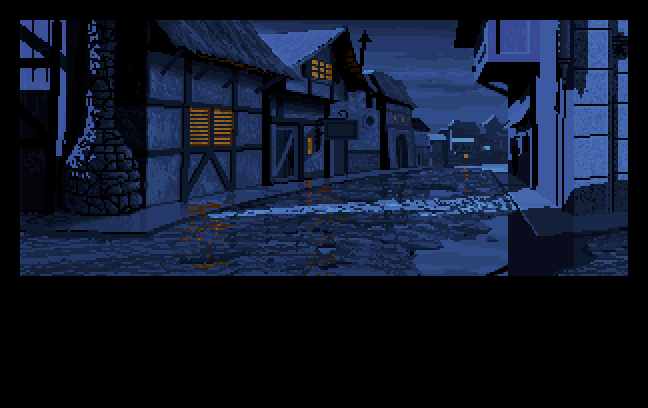
The atmosphere in Darkmoon’s temple is still excellent — the sound design and the sheer variety of set-piece encounters hold up far better than the crude EGA-era visuals might suggest at a glance. My honest complaint is the same one most players have: no automap in a game this labyrinthine is a deliberate design choice I respect but don’t always enjoy at 11pm after a long day, and inventory management between four characters gets fiddly fast. Still, if you want the tightest, most atmospheric real-time AD&D dungeon crawl from this era, this is it.
You might also like: