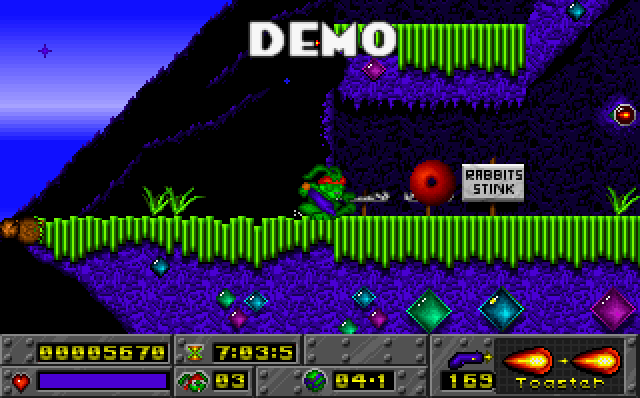
Epic MegaGames wanted to prove a PC could out-run a Sega Genesis. Jazz Jackrabbit is the gun-toting green rabbit they built to do it.
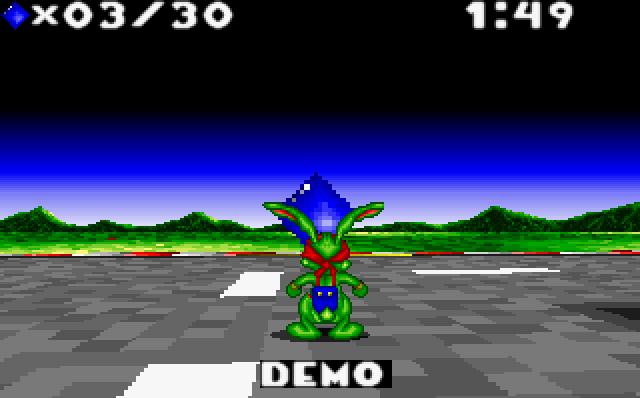
Epic’s answer to Sonic on a PC
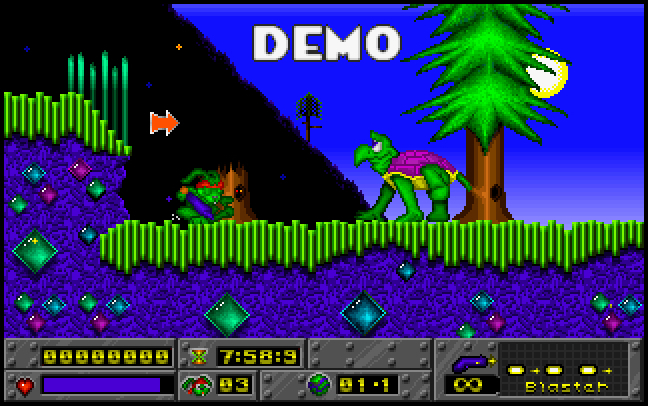
The story follows Jazz, a mercenary rabbit hired to rescue Eva Earlong from the clutches of Devan Shell, leader of the Turtle Terrorist organization. It’s pure Saturday-morning-cartoon energy, and the game leans into it completely. Proving a PC platformer could match console speed was a genuinely contentious claim in 1994 — the platform was still more associated with adventure games, flight sims, and strategy titles than fast arcade action, and plenty of skeptics doubted a keyboard-driven game could keep pace with a console built around a gamepad tuned for exactly this kind of play. Jazz Jackrabbit didn’t single-handedly settle that argument, but it’s a genuinely convincing piece of evidence for the PC side of it, and it still plays that way today — few 1994 platformers of any format have aged as well as this scrappy shareware rabbit has. The shareware version includes the first episode, Holidaius, with six full levels set across a holiday-themed alien planet — a complete and polished slice that shows off everything the game has to offer. Epic built its early reputation on exactly this kind of release: a genuinely finished, self-contained chunk given away for free, with the paid episodes existing as more content rather than the “real” game withheld behind a paywall, a shareware philosophy plenty of studios talked about but didn’t always live up to as cleanly as Jazz Jackrabbit did.
Speed, power-ups, and Holidaius
Jazz Jackrabbit is built for speed. Levels scroll at a blistering pace, with Jazz dashing, sliding, and shooting his way through vibrant alien environments. The blaster he carries can be upgraded with power-ups found throughout each level — bouncing shots, flamethrowers, and other weapons add variety to the combat. Level design rewards exploration and speed equally: blast through a level in minutes on the main path, or slow down to find hidden areas filled with bonus points and power-ups. The Holidaius setting itself deserves credit too — a holiday-themed alien planet is a genuinely odd combination on paper, but the bright, candy-colored art direction sells it, and it gives the episode a distinct visual identity instead of blurring into generic “space level” scenery. Jazz himself has a small moveset by modern platformer standards — running, jumping, and a short dash — but the level geometry is built specifically around chaining those together at speed, which is where the game’s real personality shows up compared to the more methodical, exploration-driven pacing of something like Commander Keen.
Two-player mode and other niceties
The game features a two-player mode for local competitive play, a genuine rarity for platformers of the era, and it’s worth trying if you can get DOSBox’s null-modem setup working, or just trading the keyboard for score-attack runs. A couple of concrete tips: memorize power-up locations on a first cautious playthrough, then chain them together on a speed run, since Jazz’s whole appeal is stringing momentum together. Don’t ignore the flamethrower upgrade against clustered enemies either — the bouncing shot is better for open areas but noticeably weaker against groups. It’s worth comparing to Duke Nukem II, Apogee’s own side-scrolling platformer from roughly the same era: Jazz is faster and more arcade-like, where Duke II leans more into exploration and item collection.
If DOSBox itself is the sticking point, our setup guide covers installation from scratch.
Getting Jazz running in DOSBox
- Install DOSBox if you haven’t already.
- Extract the files to a folder like C:JAZZ.
- In DOSBox: mount c C:JAZZ → c: → jazz.
How well the retro-Genesis speed holds up
Jazz Jackrabbit is joyful. The music by Robert Allen is energetic and catchy, the visuals are bright and colorful, and the sheer speed of the game is exhilarating; it holds up better than many platformers of its era. My honest criticism: the level design occasionally prioritizes speed over readability, so first playthroughs will involve some blind hits you couldn’t have reasonably seen coming, and the difficulty balance assumes you’re willing to replay levels to learn them. Even so, it’s a genuine reminder that the PC gaming world had its own answer to console platformers — and it was a pretty great one. Epic revisited the character a few years later with Jazz Jackrabbit 2, which smoothed out a lot of the rough edges, but there’s a scrappy energy to this original release that the more polished sequel never quite recaptured. The shareware episode alone is still worth the download for anyone curious what PC platforming looked like when a small studio decided speed was the whole pitch. Epic was quietly assembling a broader roster of talent in this period even while its public identity was still built around scrappy shareware releases like this one, and the audio and art direction on display here show a studio already punching above its weight.
Watch Gameplay
You might also like: