Movie tie-in games earned their bad reputation honestly in the early ’90s, which makes it worth pointing out when one actually clears the bar. Disney’s Aladdin, published by Virgin Games for DOS in 1994, is one of the ones that did, and it deserves to be remembered as more than just a footnote next to its console counterparts.
Not just a straight console port
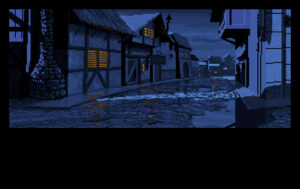
Rather than simply porting over the console versions, the DOS release adapted Aladdin’s story into its own side-scrolling platformer, sending you through the streets of Agrabah, into the Cave of Wonders, and eventually to Jafar’s palace. It arrived during a wave of high-profile Disney tie-ins, and it stood out among them for detailed, hand-animated-style sprite work that closely mirrored the film’s character animation at a time when a lot of licensed games treated the source material as an afterthought bolted onto a generic platformer.
Jumping, slashing, and one flying carpet
You guide Aladdin through levels lifted from the film’s key locations, running, jumping, and using his scimitar against palace guards and other threats along the way. A magic carpet sequence partway through shifts the pace entirely, turning the action into a fast, flying stage that breaks up the platforming rhythm and gives the game a genuine change of texture rather than more of the same throughout. Levels are built around specific jump timing and enemy placement rather than open exploration, and gem collection ties into scoring and extra lives, giving players a reason to comb each stage rather than sprint for the exit the moment it’s in sight.
Tips for clearing Agrabah cleanly
- Learn enemy placement before trying to speed through a level. This is a game built around pattern recognition, and blind rushing gets punished more often than it pays off.
- Collect gems as you go rather than backtracking; extra lives matter more in the later, tighter platforming sections than in the earlier, more forgiving ones.
- The magic carpet sequence rewards steady, controlled movement over aggressive maneuvering. It’s easy to overcorrect and clip an obstacle you could have avoided calmly.
- Save scimitar swings for enemies directly in your path; wild swinging near platforming sections is a common way to mistime a jump you’d otherwise land cleanly.
- Pay attention to guard patrol patterns rather than trying to rush past them; most enemy placements have a predictable rhythm once you’ve watched it once.
A benchmark for its category
Disney’s Aladdin is remembered as one of the stronger Disney tie-ins of the 1990s specifically because of that animation quality and the level design’s attention to the source material. It’s a useful reference point for what licensed platformers of the era were actually capable of when a studio put in real effort instead of rushing a cash-in to shelves alongside the movie’s theatrical release.
Does it still play well?
Yes, and independent of nostalgia, too — the platforming here is tight enough to stand on its own. My only real knock against it is that some of the later stages lean a bit too hard on trial-and-error hazard placement, which can turn a good run into a frustrating one over a single blind jump you couldn’t have seen coming. Still, for fans of the film or of tightly designed side-scrollers generally, it holds up.
The scimitar-and-jump combat also stays interesting longer than you’d expect from a fairly simple moveset. Enemy variety across Agrabah’s different districts keeps forcing small adjustments to how you approach a fight, rather than letting you settle into one repeated pattern for the whole game.
Worth comparing to its console siblings
Longtime fans of the franchise often end up comparing this DOS release to the better-known Sega Genesis version developed with Virgin’s own internal studio, and the two are genuinely different games under the same license rather than ports of each other. The DOS version’s slower, more methodical platforming rhythm and its heavier emphasis on gem-collection scoring give it a distinct identity, and it’s worth going in expecting something related to, rather than identical to, the version you might remember from a console.
That distinction matters for setting expectations. Players who come to the DOS release hoping for an exact match to console memories sometimes come away disappointed, while those who treat it as its own take on the same source material tend to walk away impressed by how much care went into a version of the game that a lot of people never even knew existed.
It’s also a reminder of how differently the same license could be handled across platforms in the early ’90s, well before publishers standardized on a single definitive version of a tie-in game. A single Disney film could spawn three or four meaningfully different games depending on which platform you owned, and Aladdin’s DOS release is a genuinely good example of that variety working in the player’s favor.
For collectors and curious players today, that also means tracking down and comparing versions is its own small rabbit hole worth falling into. Few licensed games from this period reward that kind of side-by-side comparison as much as this one does.
Getting it running
For an original DOS copy, mount the folder containing the game files with mount c [folder], switch to that drive using c:, and run the EXE from the DOSBox prompt. Our complete DOSBox setup guide can help if the game needs additional configuration, and our free DOS games roundup is worth a look for more like this.
Watch Gameplay
You might also like: