A game that wanted you to follow the rulebook
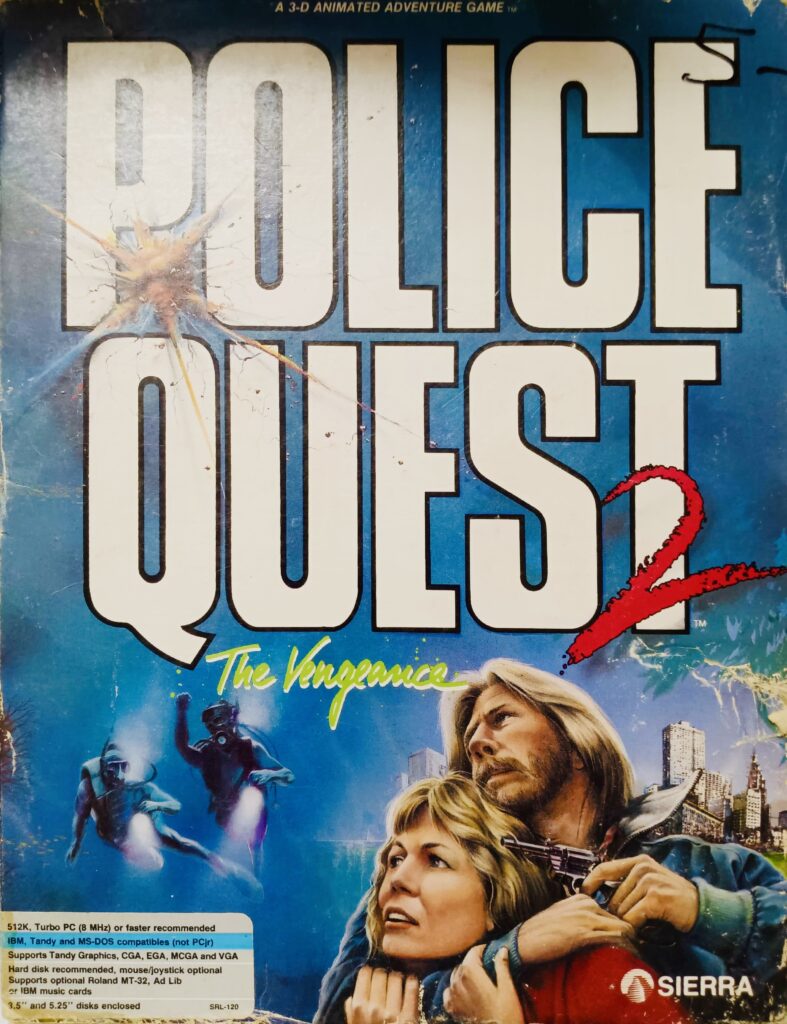
Most adventure games from 1988 wanted you to think like a puzzle-solver. Police Quest II: The Vengeance wanted you to think like a cop. Built by Sierra On-Line with direct input from Jim Walls, a former police officer, it’s the second entry in the Police Quest series, continuing the story of officer Sonny Bonds in the fictional city of Lytton, California, picking up right where the first game left off.
The Police Quest series had already staked out an unusual identity within Sierra’s catalog: grounded, procedural, and unwilling to let you skip the boring-but-realistic parts of police work. The Vengeance keeps that identity intact while raising the stakes considerably, with a more personal, thriller-driven plot that pushes Bonds out of the traffic unit and into homicide. It’s noticeably darker and more mature in subject matter than most adventure games being made at the time.
Playing it by the book, or paying for it
Police Quest II is a text-parser-driven adventure typical of late-80s Sierra titles, where you type commands to interact with the world, examine evidence, question suspects, and navigate the city. Correct procedure matters constantly: you’re expected to follow realistic protocols, from safely approaching a scene to properly handling a firearm, and getting it wrong can end the game abruptly and without much warning.
Beyond the investigative sequences, the game folds in driving segments and tense standoffs that raise the difficulty well past a typical point-and-click puzzle. That unforgiving combination of parser interface and procedural detail is a big part of what made the series notable among fans of realistic adventure gaming – it rewards players who pay close attention to detail and genuinely think like an investigator rather than a puzzle-solver hunting for the next inventory combination.
The plot itself pulls Bonds into personal territory in a way the first game never did, tangling his professional investigation with his own history in Lytton, and the writing leans into that tension rather than treating it as an afterthought. It’s a noticeably more mature story than Sierra’s other adventure output at the time, closer in tone to a paperback police procedural than to the fantasy and comedy adventures the studio is usually remembered for.
Staying alive in Lytton
- Read your badge and weapon procedures literally – Police Quest II punishes shortcuts that would get a real officer reprimanded, not just narrative dead ends.
- Save before any driving segment or standoff without exception; these moments can end the game outright, and the parser gives limited warning before things go wrong.
- When questioning suspects, try exhausting every TALK TO and ASK ABOUT combination you can think of before moving on – the parser rewards thoroughness far more than clever phrasing.
- Keep a written log of names, addresses, and evidence as you go. The investigation threads several plot lines at once, and the game doesn’t do much hand-holding to remind you what you already know.
A different kind of Sierra game
Set next to Sierra’s other big text-parser franchises of the era, like King’s Quest or Space Quest, Police Quest II stands apart for treating consequence as a core mechanic rather than a source of comedy. Where a wrong move in Space Quest usually produces a joke, a wrong move here produces a genuinely somber, matter-of-fact game over screen. It’s closer in spirit to Sierra’s own Codename: ICEMAN, which shares Police Quest’s commitment to procedural realism, than to the studio’s more whimsical fantasy adventures.
Jim Walls’ background is really the whole reason this identity exists. Very few adventure game designers of the period had actually worked the job their game was simulating, and it shows in small, specific touches – the exact order you’re expected to secure a scene, the way paperwork and protocol get treated as real obstacles rather than narrative filler. That level of specificity is hard to fake, and it’s the thing that separates Police Quest from games that just borrow a police setting for flavor without doing the underlying homework.
The Lytton setting also gives the story room to breathe in a way a lot of episodic adventure games don’t manage. Because Sonny Bonds is a recurring character with a life outside this single case, the town and its supporting cast feel more like a real, continuous place than a backdrop built purely to service one plot, which pays off in how personally the second game’s stakes land.
My honest opinion: Police Quest II is a fascinating time capsule, but it’s also genuinely punishing in ways that haven’t aged gracefully – the parser interface means you’ll occasionally lose progress to a phrasing the game simply doesn’t recognize, which is a different kind of frustration than a puzzle you haven’t solved yet. Still, few games from this era commit as fully to their premise, and Jim Walls’ insistence on authenticity gives it a weight that most contemporary adventure games never attempted.
Picking up a copy
The cleanest way to play today is through Sierra’s official re-release collection. If DOSBox and Sierra’s parser games are new territory for you, our complete DOSBox setup guide covers the basics before you start, and our free DOS games list is worth browsing for more of this era’s catalog.
Running it without headaches
Once installed, mount the game’s folder as your C drive in DOSBox, switch to that drive, and run the EXE to start. This is an older parser-driven title, so it’s fairly forgiving on hardware requirements; if you run into display or sound configuration issues, our DOSBox setup guide linked above covers the common fixes for classic Sierra adventure games, including getting period-accurate PC speaker or AdLib audio working correctly.
Watch Sonny Bonds at Work
You might also like: