The end of an era, whether it knew it or not
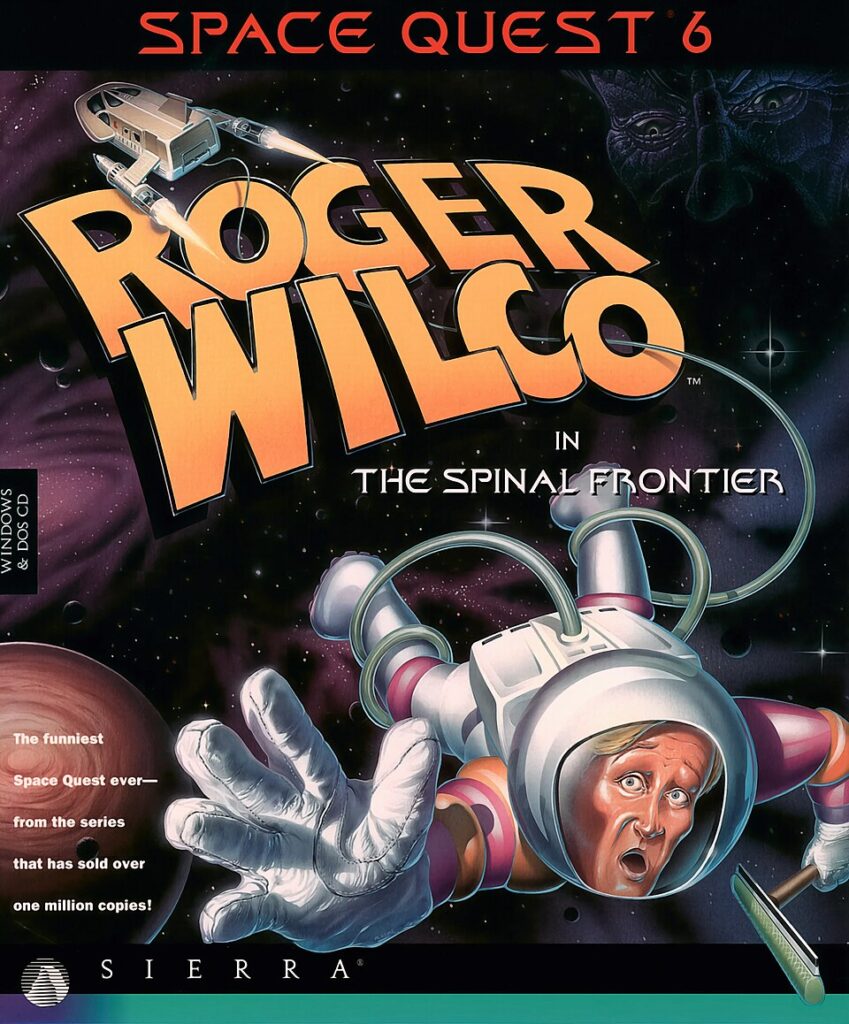
Space Quest 6: The Spinal Frontier, released by Sierra On-Line in 1995, is the sixth entry in a series built almost entirely around one joke: the galaxy’s most incompetent janitor keeps saving it anyway. Roger Wilco is back, stumbling from one absurd crisis into another, and by this point the series had a well-earned reputation for parodying science fiction tropes with a very specific brand of slapstick and pop-culture humor.
Its production history is part of what makes it interesting to revisit. Series co-creators Mark Crowe and Scott Murphy, the “Two Guys from Andromeda” who had written every previous Space Quest, departed Sierra partway through development, leaving other members of the team to finish the game. You can feel that transition in places – some of the humor lands differently than in earlier entries – but the game holds together far better than that behind-the-scenes turmoil might suggest, and it arrived using full VGA graphics and an icon-driven interface typical of Sierra’s mid-90s output.
A tour through Roger’s worst day yet
Like its predecessors, Space Quest 6 is a point-and-click adventure built around exploring locations, collecting inventory items, and solving puzzles that combine logic with the series’ trademark absurdity. Roger navigates a variety of bizarre environments, including a genuinely memorable stretch spent shrunk down and exploring the inside of an alien ambassador’s body, interacting with strange characters and objects the whole way through.
The game keeps the series’ cause-and-effect puzzle design, where progress often depends on picking up seemingly useless items early and figuring out their purpose much later. Conversations and jokes are peppered throughout, referencing science fiction films and earlier Space Quest games, and the game rewards players who explore every dialogue option and examine every object on screen rather than beelining for the obvious solution.
The presentation is a genuine step up from earlier entries in the series, with denser, more detailed VGA backgrounds and fuller voice acting throughout, since by 1995 Sierra was routinely shipping its adventure catalog on CD-ROM with a full cast rather than relying on text boxes. That extra polish doesn’t change the underlying puzzle structure, but it does make the game’s many sight gags land harder, since half the humor in a Space Quest game has always been in the background details rather than the dialogue alone.
If you’re going in blind
- Talk to every NPC more than once; Space Quest 6 changes dialogue options as the plot advances, and re-visiting characters is how you catch jokes and hints you’d otherwise miss.
- Pick up anything that isn’t nailed down, even if it looks like set dressing – the game’s cause-and-effect puzzles regularly punish players who assume an object is purely decorative.
- Save often and in multiple slots. Like most Sierra games of this era, it’s possible to walk into an unwinnable state without realizing it until much later.
- During the “inside the body” sequence, pay close attention to environmental cues rather than trying brute-force item combinations; the internal logic there is more consistent than it first appears.
Where it sits against the rest of the series, and LucasArts
Compared to earlier Space Quest entries, particularly the beloved Space Quest IV, The Spinal Frontier trades a little of the earlier games’ tight comic writing for more ambitious set-piece sequences, and longtime fans are split on whether that’s a fair trade. Set against LucasArts’ contemporary comedy adventures, like the Monkey Island series, Space Quest 6 leans harder into gross-out and slapstick humor rather than clever wordplay, which is either exactly your sense of humor or very much not.
My honest take: this is a solid, occasionally inspired Space Quest game rather than a series highlight, and it shows real seams from its troubled development. But there’s still a lot of joy in Roger Wilco’s specific brand of loserdom, the presentation is the best-looking the series ever got, and it’s a fitting, if bittersweet, note for the franchise to go out on, since Sierra never made another mainline Space Quest game after this.
What sticks with me most on replaying it is how gamely the game commits to its weirdest ideas even under the circumstances. The body-horror-adjacent detour inside the ambassador is exactly the kind of high-concept gag the earlier games would have built a whole subplot around, and seeing the new team pull it off convincingly says a lot about how much institutional knowledge Sierra had built up by 1995, even without the original writers steering the ship.
Where to find it
Rather than hunting down aging install discs, the cleanest way to play today is through the official re-release. New to running Sierra’s DOS catalog at all? Our complete DOSBox setup guide covers everything you need before diving in, and our roundup of free DOS games is worth a look if you want more to play afterward.
Getting Roger flying smoothly
After installing, mount the folder containing the game as your C drive in DOSBox with something like mount c c:\games\spacequest6, switch to that drive with c:, and launch the EXE. This is a late-era Sierra SCI title, so it expects fairly generous cycles for its animation and digitized speech to play smoothly; if dialogue stutters or audio crackles, that’s your first thing to check. Players who’d rather sidestep DOSBox configuration entirely can also run it through ScummVM, which supports Sierra’s SCI-engine catalog including this one. Our DOSBox setup guide covers both routes in detail.
Roger Wilco in Motion
You might also like: