Your character finally faces something that can actually kill you
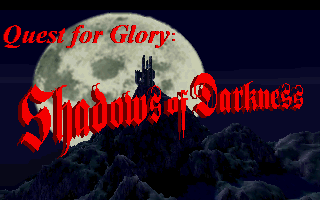
Quest for Glory IV: Shadows of Darkness, released by Sierra On-Line in 1993, is the fourth entry in a series built around a genuinely unusual promise: bring your character with you. Designed by Lori and Corey Cole, the Quest for Glory games let players import their hero across the entire series, carrying over skills, class choices, and story decisions from previous installments, so the character standing in Mordavia at the start of this game could be the same one who started as a nobody several games earlier.
That continuity makes Shadows of Darkness hit differently than most Sierra adventures. It drops the series’ customizable hero into a gothic-horror land steeped in Eastern European vampire and werewolf folklore, a stark tonal shift from the lighter fairy-tale settings of the earlier Quest for Glory games. The stakes feel personal specifically because the game assumes you’ve already invested hours building this character somewhere else.
Adventure puzzles with an RPG spine
Quest for Glory IV blends traditional point-and-click adventure puzzle-solving with RPG mechanics, including character stats, combat, and skill progression. You can play as a fighter, magic user, or thief, and each class offers a genuinely different way to approach puzzles and encounters rather than just re-skinning the same solutions with different flavor text.
The day-night cycle plays a major role here, with different characters, dangers, and opportunities appearing depending on when you visit a location. Combat tests the skills you’ve built up over the adventure, while conversation and exploration slowly reveal the mystery behind Mordavia’s curse. It’s a game that rewards both careful exploration and thoughtful character building in roughly equal measure, which is rarer than it sounds in adventure gaming.
The atmosphere is doing a lot of heavy lifting here, and it works. Mordavia’s fog-choked forests, crumbling castle, and unsettling townsfolk are rendered with a level of detail and mood that feels genuinely ahead of its time for a Sierra adventure, and the game leans on suggestion and dread rather than jump scares, more in line with gothic literature than with horror-movie shock tactics. It’s one of the few Sierra titles from this period where the setting itself feels like a character.
Surviving Mordavia’s nights
- Don’t wander the wilderness after dark early on, regardless of class – nighttime encounters scale up sharply, and Mordavia is not shy about punishing an under-leveled character.
- Rest and revisit town locations on a schedule; several important characters and quests only appear at specific times of day, and it’s easy to miss content just by never checking back.
- Magic users should prioritize learning detection and defensive spells early – Mordavia’s horror-tinged encounters are considerably more survivable with a spell or two in your back pocket than by relying on combat alone.
- Keep track of NPC schedules in a notebook if you’re playing a thief; several of the class’s unique opportunities are time-gated and easy to permanently miss.
How it stacks up against the rest of the series, and its RPG cousins
Compared to earlier Quest for Glory games, which lean more on humor and lighter fantasy adventure, Shadows of Darkness is a deliberate tonal swing toward genuine horror, closer in mood to Ultima’s darker moments than to Sierra’s own King’s Quest. Against straight RPGs of the era, it’s still lighter on systems – there’s no deep itemization or complex build-crafting – but the hybrid of adventure logic and character progression is something few other games of the period attempted with this much confidence.
My honest take: this is widely considered the strongest entry in the series for good reason, and I agree with that consensus, though the atmosphere occasionally outpaces the puzzle design, and a couple of late-game sequences lean harder on trial and error than the earlier acts do. Even played as a standalone entry without an imported character, it’s a memorable, distinctive adventure that’s aged better than most of Sierra’s early-90s catalog.
What impresses me most is how much the game trusts its own premise. A lot of “dark” fantasy games from this era chicken out at some point and undercut the horror with a joke or a cop-out ending; Shadows of Darkness mostly doesn’t. It commits to Mordavia’s dread all the way through, and the payoff for that commitment is a game that still feels genuinely atmospheric more than thirty years later, long after flashier but shallower horror games from the same period have been forgotten.
It’s also worth noting how well the class system pays off the earlier games’ groundwork. A fighter’s straightforward combat approach to Mordavia’s threats plays completely differently from a magic user’s reliance on detection and defensive spells, and a thief’s ability to sneak past danger entirely changes which of the game’s horrors you actually confront directly. Few adventure-RPG hybrids from this era let your build reshape the story’s tone this thoroughly.
Finding a copy
The official GOG re-release is the simplest way to get a clean, working copy today. If you’re new to Sierra’s SCI-engine adventures, our complete DOSBox setup guide is a good place to start.
Getting Mordavia running properly
Once installed, mount the folder containing the game as your C drive in DOSBox, switch to that drive, and launch the EXE. Sierra’s SCI-engine adventures of this era generally expect a Sound Blaster-compatible setup at the default IRQ 7 / DMA 1 configuration for music and effects to play correctly; our DOSBox setup guide linked above covers configuring sound and display settings for the best experience.
Mordavia on Screen
You might also like: