Doom changed everything about first-person shooters the week it launched in December 1993. A few days earlier, a different game had quietly done something almost as interesting, and then got completely buried by the timing.

Released Days Before Doom Changed Everything
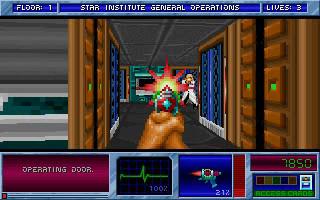
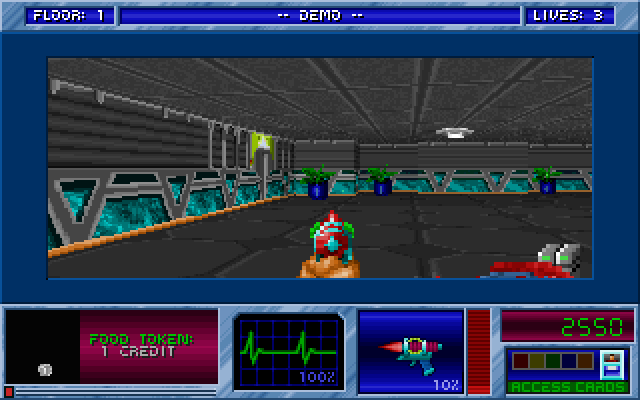
Blake Stone: Aliens of Gold was developed by JAM Productions and published by Apogee Software, built on a licensed version of the Wolfenstein 3D engine but pointed at a spy thriller instead of a war story. It’s easy to forget it exists, sandwiched as it was between Wolfenstein 3D’s dominance and Doom’s arrival, but it’s a genuinely well-made game that deserved a lot more attention than it got.
The timing really was brutal. Blake Stone launched into a market that had spent nearly two years absorbing Wolfenstein 3D clones of wildly varying quality, and just as it was carving out its own identity within that crowded field, id Software’s next release redefined what a first-person shooter could look and feel like almost overnight. Apogee had bet on the Wolfenstein-engine formula having more room to run, and in a strict commercial sense that bet didn’t pay off the way it might have a year earlier — but the game itself holds up as one of the more inventive licensees of id’s early engine technology.
Agent Stone vs. Dr. Goldfire
You play Agent Blake Stone, a British Intelligence operative sent to infiltrate the operations of the mad scientist Dr. Pyrus Goldfire, who has developed technology to mutate humans into alien hybrids and plans to sell it to the highest bidder. Stopping him means fighting through six episodes of laboratories, factories, and research centers — considerably more structured, objective-driven level design than Wolfenstein 3D’s “find the elevator” approach.
Talk First, Shoot Later: Using the Informants
- Look before you shoot. Scientists scattered through the levels look like enemies at a glance but will give you useful hints if you leave them alone instead of gunning them down on sight.
- Informants can point you toward secret areas and boss locations, so it’s worth taking the extra few seconds to approach cautiously rather than clearing every room with gunfire first.
- Use food dispensers for health top-offs between fights rather than saving them for emergencies — they refill over time, so hoarding them is usually wasted caution.
- Manage your weapon progression deliberately: the pistol gives way to an auto-charge cannon, a grenade launcher, and eventually a BFG-style heavy weapon, and switching to the right tool for a given enemy type matters more than spamming your strongest gun.
- Explore each level fully before heading for the exit — unlike Wolfenstein 3D’s simpler layouts, Blake Stone’s objective-driven levels often hide key items or informants in rooms that aren’t on the most direct path through.
How Blake Stone Improved on Wolfenstein 3D
Blake Stone plays like a smarter, more feature-rich version of Wolfenstein 3D rather than a simple reskin. Floor and ceiling textures give levels more visual variety than Wolfenstein’s flat, uniform walls, the informant system adds a genuine risk-reward decision to encounters that Wolfenstein never had, and the objective-based level design goes beyond just finding an exit. The enemy roster also escalates more interestingly, from ordinary guards and mutants up through alien hybrids and biomechanical creatures that get meaningfully more dangerous as the campaign progresses.
Grabbing the Free Episodes
How to Run with DOSBox
- Install DOSBox if you haven’t already — our setup guide covers configuration in detail.
- Extract the files to a folder like
C:BLAKE. - In DOSBox:
mount c C:BLAKE→c:→bstone.
A Sequel Worth Knowing About
Blake Stone deserves far more recognition than it got. The spy setting is a refreshing change of pace from demons and Nazis, the improvements over the base Wolfenstein 3D formula are meaningful rather than cosmetic, and the shareware release alone offers a surprising amount of content. It later got a direct sequel, Planet Strike, that continues Stone’s fight against Goldfire’s forces with an even larger arsenal. If I’m honest about its weaknesses: the spy-thriller premise doesn’t always follow through on its promise, and a lot of the level layouts still boil down to fairly mazy corridor-hunting once the informant novelty wears off. Still, it’s a forgotten gem of the DOS era that rewards anyone willing to give it a chance. If you’ve already burned through Wolfenstein 3D and are looking for something built on the same bones but with a fresher premise, this is exactly the kind of overlooked title worth digging up. Where Wolfenstein 3D stripped everything down to pure momentum — run, shoot, find the key, find the exit — Blake Stone slows down just enough to make you second-guess whether that approaching sprite is a threat or a source of information, and that small hesitation changes the rhythm of the whole game in a way that’s still interesting three decades later. It’s a shame the Wolfenstein-engine era of shooters gets reduced so often to just Wolfenstein 3D itself, because games like this one prove there was real room for experimentation within that formula before Doom moved the entire genre onto different ground. Give the first two free episodes an honest chance and you may find yourself hunting down the rest of the series, informants and all, before you even realize how much time has passed at Dr. Goldfire’s expense. It’s earned that kind of second look for a long time now.
Watch Gameplay
You might also like: