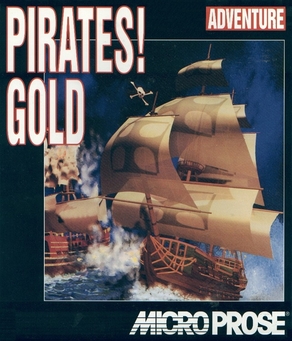
There’s a specific kind of magic in a game that lets you start a session planning a treasure hunt and end it married into a colonial governor’s family instead, having never opened your map once. That’s Pirates! Gold in a sentence — a game so loosely structured around its own systems that it never tells the same story twice.
Sid Meier’s Second Pass at His Own Idea
Pirates! Gold, released in 1993 by MicroProse, is an enhanced remake of the original 1987 Pirates!, both designed by Sid Meier. The Gold edition adds VGA graphics, CD audio, a friendlier interface, and an expanded version of the original’s content. Set during the golden age of Caribbean piracy, it drops you in command of a ship and crew, raiding merchant vessels, sacking ports, hunting lost treasure, and climbing the social ladder of colonial society — sometimes literally, by marrying into it.
A Sandbox Built From Five Different Games
What makes Pirates! Gold remarkable is how many genres it quietly stitches together without any of them feeling like an afterthought. Naval combat plays as a top-down sailing simulation where wind direction and ship upgrades genuinely matter. Boarding an enemy vessel switches to side-scrolling sword fighting. Between battles you’re trading goods port to port, accepting treasure map missions, rescuing kidnapped relatives, and courting the daughters of colonial governors. Crew morale depends on regular plunder, and the whole career runs on a ticking clock — your character ages in real time, and eventually retirement forces a final reckoning of your life’s work.
Tips for Building a Legendary Career
A few things I wish someone had told me the first time through: keep your crew’s morale up by attacking ships regularly even when you don’t need the loot, because a mutiny mid-voyage is one of the more humiliating ways to end a promising career. Wind direction matters more than it looks like it should in naval battles — approaching from upwind gives you the advantage, so it’s worth circling before engaging a tougher opponent. And don’t ignore the dancing minigame during governor visits; it’s a small detail, but doing well there noticeably affects how quickly a relationship with a governor’s daughter progresses, which matters if you’re chasing the marriage-based ending.
How Gold Actually Improved the Original
The 1987 original was already a genre-defying hit, but the Gold edition’s VGA visuals and expanded content make it the clearly superior way to experience the design today. The interface streamlining in particular removes a lot of the friction that made the original occasionally fiddly, without sanding down any of the systems that made it interesting in the first place. It’s rare for a remake to improve on a beloved original this cleanly.
Running It in DOSBox
Once you have the game files from a legitimate copy, extract them and open DOSBox. Mount the folder as a drive, switch to it, and run PIRATES.EXE to launch. New to DOSBox? Our complete setup guide walks through configuring sound and controls if you run into trouble.
The Verdict
Pirates! Gold is about as close to a timeless design as DOS gaming produced. Every session generates a different story — an epic treasure hunt, a surprising romance, a desperate sea battle in a storm — and Sid Meier’s genius was building a world with just enough interlocking systems to feel alive without ever becoming overwhelming. If there’s a criticism, it’s that the endgame retirement scoring can feel anticlimactic after dozens of hours of freeform chaos. Even so, more than three decades on, nothing has fully replicated what this game achieved, and it remains one of the most replayable things you can run in DOSBox today.
Choosing Your Starting Nationality
One decision new players tend to underrate is which nationality to sail under at the start. Your choice affects which ports treat you as a friendly face versus a target, and it quietly shapes the early game’s difficulty far more than the difficulty slider itself. Starting under a nation with fewer nearby rivals gives you room to build up your ship and crew before the harder factions start hunting you, which matters a lot if this is your first time through the campaign.
Why the Formula Never Got Old
Part of what keeps Pirates! Gold replayable decades later is that none of its systems are deep enough on their own to sustain a whole game, but stacked together they create a loop that never quite repeats the same way twice. A treasure hunt can turn into a naval ambush, which can turn into a rescue mission, which can turn into a marriage proposal, all inside a single afternoon session. Few open-world designs since have matched that density of unplanned incident without piling on needless complexity to get there.
A Small Honest Criticism
If there’s a real weakness beyond the endgame scoring, it’s that the sword-fighting during boarding actions is noticeably simpler than everything surrounding it, and repeated encounters can start to feel like a formality once you’ve learned the basic parry-and-strike rhythm. It never drags the rest of the game down, but it’s the one system here that hasn’t aged quite as gracefully as the sailing, trading, and diplomacy layered around it.
None of that stops Pirates! Gold from being a game worth returning to every few years. Few open-world titles from any era manage to feel this replayable on the strength of interlocking systems rather than scripted content, and that alone earns it a permanent spot in any serious DOS library.
You might also like: