A Sequel Nobody Was Sure Would Work
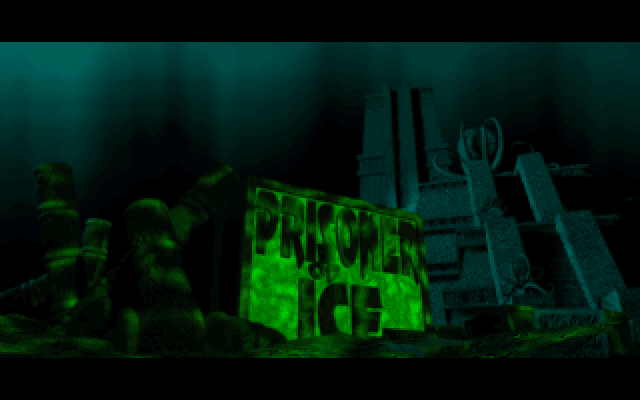
Shadow of the Comet was Infogrames’ first attempt at Lovecraftian adventure gaming, and it sold well enough that the studio went back to the well in 1995 with Prisoner of Ice. Instead of reusing the same setting, Infogrames Multimedia moved the action from a fictional New England town to the ice shelves of Antarctica, borrowing its backdrop from H.P. Lovecraft’s At the Mountains of Madness. You play an American agent attached to Naval Intelligence, stationed aboard the submarine H.M.S. Victoria, sent to find out what the Nazis are digging out of the ice before the war turns even stranger than it already has.
Swapping small-town New England for a submarine and a secret Antarctic base does more than change the scenery. It gives Prisoner of Ice a claustrophobia the first game never had, and folding wartime espionage into Mythos horror was a smart way to keep the sequel from feeling like a reskin of Shadow of the Comet.
Piecing Together a Nazi Conspiracy in the Ice
The structure will feel immediately familiar if you’ve played the first game: point-and-click investigation, a cast of soldiers, scientists, and prisoners to interrogate, and documents to collect and cross-reference as you work out what the Germans actually found beneath the ice. The submarine section up front forces you to get comfortable with a tight, enclosed space before the game opens into the base and the frozen wastes beyond, and that slow burn does a lot to build tension before anything overtly monstrous shows up.
As in Shadow of the Comet, you can’t fight your way through most of the threats you’ll encounter. When something from beyond human comprehension crosses your path, the answer is almost always to run, hide, or use the environment against it, not to stand and trade blows.
A Few Tips Before You Head Into the Ice
- Read everything you pick up, and read it again later. Prisoner of Ice leans on documents and overheard dialogue to explain what’s going on, and it’s easy to walk past a clue that only makes sense once you’ve spoken to a second or third character.
- Don’t assume every encounter with a monstrous threat has a fight-your-way-out solution. If direct confrontation isn’t working, the game usually wants you to evade or outmaneuver it instead, often by ducking into a side passage or using a piece of the submarine’s own machinery against your pursuer.
- Talk to every NPC more than once. Dialogue options update as the investigation progresses, and revisiting someone after a new discovery can unlock information that wasn’t available earlier — the game rarely flags when this happens, so it pays to be proactive about it.
- Save often, in multiple slots. Given the survival-focused encounters, it’s easy to walk into a scripted death you didn’t see coming, and losing an hour of investigation to a single bad guess is far more discouraging than losing five minutes.
How It Stacks Up Against Shadow of the Comet
Shadow of the Comet leaned on slow-build small-town dread, with the player as an outsider whose curiosity slowly uncovers a town’s rotten secret. Prisoner of Ice trades that atmosphere for something closer to a wartime thriller with cosmic horror bolted on, and the submarine and Antarctic base give it a more confined, tense structure than the first game’s open town layout. If you liked the original for its slow investigative pacing, this one keeps that DNA but wraps it in a plot that moves a little faster and raises the stakes from the opening minutes.
Legacy: A Quiet Corner of the Cthulhu Mythos
Neither Shadow of the Comet nor Prisoner of Ice ever became a household name the way Alone in the Dark did with its own take on Lovecraftian horror, but Infogrames’ two-game run helped prove that cosmic horror could support a full adventure game rather than just a horror-flavored dungeon crawl. The DRM-free re-release decades later, alongside its predecessor, speaks to a small but persistent fan base that kept the games’ reputation alive long after Infogrames moved on to other things entirely. It’s a modest legacy compared to some of its contemporaries, but a real one — you can draw a fairly straight line from these two games to the wave of narrative-heavy Lovecraftian adventures that followed in the 2000s and 2010s.
Setting It Up in DOSBox
This one runs the same way most Infogrames adventures from the period do: point DOSBox at the folder with mount c [folder], switch over with c:, and start the game’s executable. If you’ve never touched DOSBox before, our setup guide covers the basics from mounting drives to getting sound working, and it’s worth a skim if you’re configuring your first DOS game rather than your fifth. Sound card configuration matters more than usual here, since a lot of the Antarctic base’s atmosphere comes through ambient audio rather than dialogue, so it’s worth taking the extra few minutes to get it right instead of settling for default AdLib output. Once it’s running, our free DOS games roundup is a good place to look for something to play between chapters.
Where Prisoner of Ice Lands in 2026
Prisoner of Ice never quite escapes the shadow of its predecessor — it’s a sequel that refines rather than reinvents — but the Antarctic setting and wartime plot give it enough of its own identity to be worth playing on its own terms. My honest gripe is pacing: the middle stretch on the submarine can drag if you’re used to more modern horror adventures, and a few of the survival sequences rely on trial-and-error deaths that feel more like memorization tests than genuine puzzles. Still, the atmosphere holds up, the official DRM-free release means you don’t have to go hunting for old CDs, and it’s a satisfying pick for anyone who liked Shadow of the Comet or just wants more Lovecraft filtered through actual gameplay instead of pure prose.
Watch Gameplay
You might also like: