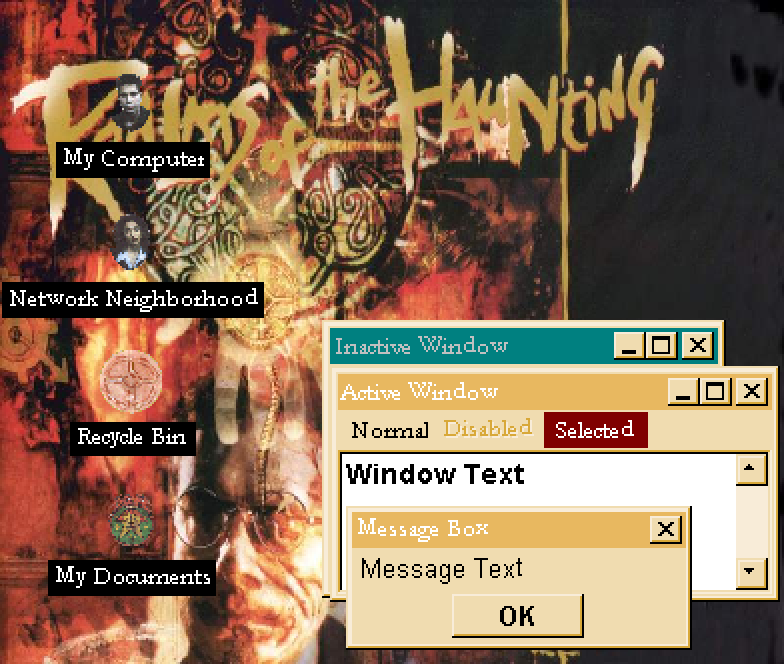
Picture a mid-90s FMV adventure and a mid-90s 3D shooter as two separate aisles in a software store. Gremlin Interactive’s Realms of the Haunting decided it didn’t want to pick an aisle. The result is a horror adventure that spends long stretches investigating a mansion through live-action video, then abruptly hands you a weapon and drops you into first-person combat against demonic enemies.
A Family Mystery That Escalates Fast
You play Adam Randall, returning to his recently deceased father’s mansion, only to discover the house hides a gateway between the human world and a realm of angels and demons. What starts as a personal investigation spirals into a supernatural conflict that spans dozens of interconnected locations — mansion, catacombs, and stranger realms beyond. Gremlin Interactive clearly poured a huge production budget into this, blending full-motion video cutscenes with actual actors into 3D-rendered environments, a combination few developers attempted at this scale.
That production ambition shows in the sheer scope of the thing. This isn’t a tight, focused adventure — it’s a sprawling, branching world that took real commitment from Gremlin to build, at a time when FMV titles and 3D action games were treated as fundamentally separate genres rather than ingredients you could mix.
Gremlin Interactive wasn’t a small studio by 1997 — they’d already built a broad catalog across multiple genres and platforms — but committing this much of a production budget to actors, sets, and filmed cutscenes for a PC adventure game was still a genuine gamble in an industry that was growing increasingly wary of the FMV format’s declining reputation by the mid-90s.
Adjusting to the Pace Swings
- Treat the exploration sections like a proper adventure game — talk to everyone, revisit rooms after new information, and don’t assume a puzzle is solved just because you found an obvious item for it.
- When combat kicks in, don’t expect Doom-level speed. The shooting sequences are a gear change, not the main event, so approach them cautiously rather than trying to run-and-gun.
- Keep track of which weapons and supernatural tools you’ve picked up; the game doesn’t always signal clearly when an earlier item becomes relevant again.
- Given the scope, take notes on unresolved threads. With dozens of interconnected locations, it’s easy to forget a lead from hours earlier.
- Let the FMV performances actually inform your investigation choices — character reactions during dialogue often hint at what to pursue next more clearly than the environment does.
The Sheer Scale of Production
It’s genuinely hard to overstate how much this game is trying to do at once. Filming live-action FMV sequences with real actors, building out 3D environments for dozens of interconnected locations, and layering a functional shooter combat system on top of all of it — that’s a production scope closer to a much bigger studio’s flagship release than what most DOS adventure games from 1997 were attempting.
That ambition inevitably means some seams show. The transition between FMV dialogue and the 3D-rendered world isn’t always seamless, and the sheer size of the game means pacing occasionally sags in the middle stretches. But it’s worth remembering that Gremlin was gambling real production money on a genre mashup that had almost no direct precedent to learn from — there wasn’t an established playbook for “FMV horror adventure with FPS combat” to follow.
Where It Sits Among Its Peers
Compare it to the era’s big FMV names — The 7th Guest, Phantasmagoria — and Realms of the Haunting is doing something none of them attempted: giving you an actual first-person shooter layer on top of the investigation, rather than sticking to point-and-click puzzle solving throughout. That hybrid identity is both its calling card and, honestly, its biggest risk. Committing to two genres at once means neither the adventure half nor the shooter half gets the same polish a dedicated title in either genre might have delivered.
Still, decades later, the ambition is what stands out. Few developers were willing to gamble a full production budget on a genre mashup this unusual, and Realms of the Haunting’s scope still feels impressive against the backdrop of what else DOS adventure games were attempting in 1997.
My honest criticism: the game asks a lot of a player’s patience across its full length, and the shift between investigation and combat doesn’t always land smoothly — there are stretches where the shooting sequences feel bolted onto the adventure structure rather than fully integrated with it. If you’re playing primarily for the mystery and the FMV performances, expect the combat sections to occasionally feel like an interruption rather than a natural extension of the story.
Even with those pacing issues, I keep coming back to how rarely anyone has attempted this specific combination since. FMV largely died out as a format by the early 2000s, and few developers since have tried marrying filmed performances with real-time 3D exploration and combat at this scale, which leaves Realms of the Haunting standing almost alone in its particular corner of gaming history.
Tracking Down a Copy
If you’re setting up DOSBox for the first time, our setup guide covers the process from start to finish, and our roundup of free DOS games is a good detour if you want something lighter afterward.
Configuring DOSBox for This One
The GOG release is pre-configured to run through DOSBox out of the box, so installing it is normally all you need. Working from an original DOS copy means mounting the game’s folder as a virtual drive using mount c [folder], switching to it with c:, and starting the EXE from the DOSBox command line — our guide above walks through the full process.
A Look at the Game
You might also like: