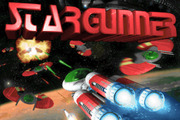
By 1996, Apogee had shipped enough shooters to know exactly what worked, and exactly how to end an era on a high note. Stargunner turned out to be the company’s last release under its original name before folding into 3D Realms — and it’s a genuinely fitting send-off.
The Last Game to Wear the Apogee Name
Stargunner arrived on November 19, 1996, and holds a specific place in Apogee history: it was the last game released under the Apogee label before the company folded its shooter and action output into 3D Realms and its other studio divisions, leaving the Apogee name largely retired for the rest of the decade. It was developed by Terminal Reality and published by Apogee Software.
That timing matters more than it might seem. By late 1996, the DOS shooter had been through several years of steady iteration — Raptor, Major Stryker, and a string of other Apogee titles had already worked out most of what made the genre satisfying, and 3D-accelerated Windows games were visibly on the horizon. Stargunner landed right at the point where the DOS shooter genre had nowhere left to go but to be really, really polished, and that’s exactly the lane it occupies rather than trying to reinvent the formula from scratch.
Piloting the Stargunner Across Thirty Levels
You pilot the Stargunner craft across 30 levels of horizontal scrolling space combat, battling an alien invading fleet that has devastated Earth. Apogee eventually released Stargunner as freeware on June 22, 2005, closing the loop on a game that had spent nearly a decade as a purchase-only title before becoming freely available to a new wave of DOS enthusiasts.
How the Weapon Upgrade System Actually Works
Your ship can be equipped with different primary weapons — spread shots, lasers, bouncing rounds — and secondary weapons like missiles and bombs. Energy pickups replenish shields, and power-up stars collect to upgrade your currently equipped weapon through multiple power levels. That last detail matters more than it sounds: power-up stars only upgrade the weapon you currently have equipped, so settle on a primary early in a level rather than switching indecisively and diluting your upgrade progress.
Reading the Battlefield: Fighters, Cruisers, and Capital Ships
Enemy variety is excellent — small fighters, armored cruisers, stationary turrets, and massive capital ships all appear throughout the campaign. Because that variety ranges so widely, prioritize threats by how much screen space they control: a lone fighter can usually wait, while a capital ship’s guns cannot. Shields absorb damage but drain quickly under sustained fire from armored cruisers and turrets, so use them to survive a specific dangerous pattern rather than as a constant crutch.
Staying Alive Against Stargunner’s Bosses
Boss encounters at the end of each world require sustained damage output while managing threats from regular enemies still on screen. Treat every single boss encounter as its own short lesson in a completely new attack pattern rather than a repeat of the last one, and keep moving laterally at all times during these fights — Stargunner’s bosses punish players who plant themselves in one spot far more than those who reposition constantly, and standing still to maximize damage output is usually the fastest way to lose a shield you’ll need for the next wave.
Learning a boss’s specific attack pattern before committing to an aggressive approach pays off more here than in most Apogee shooters — the patterns are varied enough across all thirty levels that treating every boss the same way, hugging one side and firing constantly, will get you killed against several of the later encounters. Terminal Reality clearly wanted the boss roster to feel individually designed rather than reskinned versions of the same encounter, and it mostly succeeds at that across thirty levels, which is a harder trick to pull off than it sounds, especially across a campaign this long without the pacing sagging in the middle stretch, which is where a lot of thirty-level shooters from the era genuinely start to drag. Stargunner keeps introducing fresh enemy silhouettes and hazard combinations late into the campaign instead of just recoloring earlier threats, and that commitment to variety across thirty full levels is a big part of what makes it a fitting final word for the label before the Apogee name itself went quiet for the remainder of the decade.
From Raptor’s Vertical Roots to a Horizontal Shooter
Stylistically, Stargunner owes an obvious debt to Raptor: Call of the Shadows, Apogee’s earlier and equally beloved vertical shooter, translating that game’s weapon-upgrade-and-survive structure into a horizontally scrolling format with far more detailed SVGA art. The soundtrack came from Lee Jackson, Apogee’s longtime in-house composer, who had already scored a run of the company’s biggest shooters and brought a similarly driving, synth-heavy score to Stargunner’s thirty stages. The SVGA graphics were genuinely impressive for 1996 DOS gaming — detailed ship sprites, parallax scrolling backgrounds, and explosion effects that covered the screen — and as one of the last major DOS shooters before Windows gaming took over completely, Stargunner represents the genre at its highest point of technical achievement.
DOSBox Setup
Our DOSBox tutorial handles the groundwork; the notes below are specific to this game. When you finish this one, the free DOS games roundup has your next download.
Follow our DOSBox guide and run STARGNNR.EXE.
Watch Gameplay
You might also like: