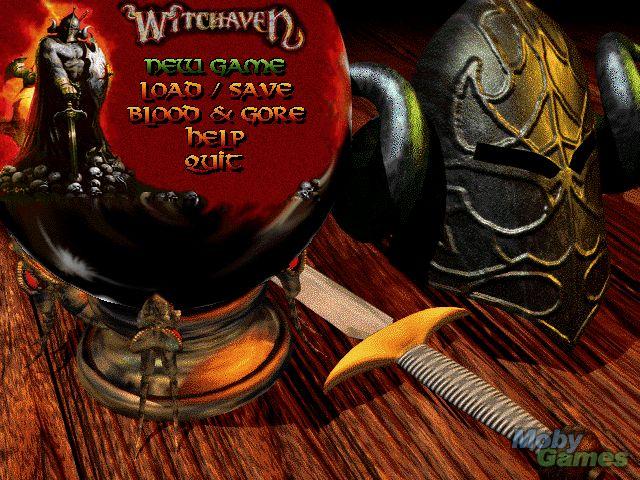
By 1995 the Build engine had a reputation, and it wasn’t for swordplay. Duke Nukem 3D and Blood were still ahead of it on the release calendar, but the engine was already becoming synonymous with pistols, shotguns, and pipe bombs. Witchaven took that same technology and pointed it somewhere nobody expected: a dark fantasy dungeon crawl where you swing a mace instead of pulling a trigger.
A Knight Against a Witch Queen
You play Grondoval, a knight sent to stop the witch queen Illwhyrin before she finishes a ritual that would unleash chaos on the world. Capstone Software built the game on the Build engine’s sector-based level design, which let them stack dungeons, towers, and catacombs in ways that were genuinely unusual for a first-person game of the period — room-over-room architecture that most of its contemporaries couldn’t manage.
What makes Witchaven interesting historically is timing. It arrived right as the first-person shooter was hardening into a genre with its own unwritten rules, and Witchaven quietly refused most of them. No hitscan weapons defining the pace, no corridor-shooter rhythm — just melee timing, spellcasting, and dungeon crawling wearing an FPS engine’s clothes.
Capstone was better known at the time for licensed and lower-budget releases than for genre-defining originality, which makes Witchaven’s willingness to gamble on melee-first combat feel like a genuine risk rather than a safe bet on a proven formula. It never earned the sales or critical attention of id Software’s output, but the fact that a mid-tier publisher was willing to build a full dungeon-crawling RPG hybrid on Build engine tech at all says something about how flexible that engine actually was.
A sequel, Witchaven II: Blood Vengeance, followed not long after, refining the combat and expanding the scope, which suggests Capstone saw enough of an audience in the original’s approach to invest in a follow-up rather than treating it as a one-off experiment. That alone puts Witchaven in a different category from most of the era’s forgotten curiosities — it was successful enough, at least internally, to justify building on rather than abandoning.
Making Melee Actually Work in First Person
- Don’t button-mash your swings. Whiffing and getting punished mid-recovery is the single biggest way new players die in the early dungeons.
- Save your spells for situations melee can’t solve cleanly — groups, ranged enemies, or anything that punishes you for closing distance.
- Search corners aggressively. The room-over-room level design hides a lot of its best loot and shortcuts in spaces you’d walk right past in a typical shooter.
- Learn each weapon’s reach before committing to it as your main. A mace and a sword have very different effective ranges, and picking the wrong one for a tight corridor will cost you health.
- Treat mana as a resource to spend proactively, not just to save for emergencies — a well-timed spell before a fight starts is often more useful than one cast mid-panic.
The Weapons and Spells at Grondoval’s Disposal
Grondoval’s arsenal spans a range of melee weapons, from quick, light blades to slower, heavier maces and axes, and the game expects you to switch between them based on the situation rather than settling on a single favorite. Faster weapons let you interrupt enemy attacks more reliably; heavier ones hit harder but leave you exposed during the swing’s recovery, which matters a lot in a level design built around ambushes from side passages.
The spell list runs alongside that weapon roster, covering offensive options like fireballs as well as defensive and healing magic. Because mana is limited, the game is really asking you to think tactically about when melee alone is enough and when you need to spend a resource to tip a fight in your favor — a much more RPG-flavored decision than most 1995 shooters ever asked players to make.
Compared to Its Dark Fantasy Neighbor
Witchaven shipped the same year as Hexen, id Software’s own detour into dark fantasy, and the two make an interesting pair. Hexen kept the traditional shooter toolkit (ranged weapons, hub-based level structure, class-based variety) and dressed it in medieval trappings. Witchaven went further, committing to melee as the primary verb in a way Hexen never did. Neither approach won out commercially — the Doom formula did — but Witchaven’s willingness to gamble on something genuinely different is what’s kept it alive among Build engine enthusiasts decades later.
The honest criticism: combat feedback is stiffer than modern melee games have trained us to expect, and the game’s pacing can feel slow if you come in wanting Duke Nukem 3D’s momentum. It rewards patience more than reflexes, which isn’t for everyone, and the dungeon layouts can occasionally feel more like a maze to endure than a level to enjoy exploring.
I’d also flag the difficulty spikes around some of the tougher enemy types — hags and certain undead in particular can punish a player who hasn’t yet learned to respect their attack range, and Witchaven doesn’t do much hand-holding about it. That’s consistent with the game’s overall philosophy of expecting you to learn its systems the hard way, but it’s worth knowing before you head into a dungeon expecting a gentle difficulty curve.
Getting Your Hands on It
New to emulating DOS games at all? Our DOSBox setup guide covers everything from mounting drives to fixing sound issues.
Running It Through DOSBox
Pick it up through GOG and the modern installer configures DOSBox for you automatically, so you can jump straight into the dungeons. Running an original copy instead means mounting the game’s folder as a virtual drive with mount c [folder], switching to it with c:, and launching the EXE from the DOSBox prompt — our DOSBox guide above covers the full process if any of that is new to you.
Gameplay Footage
You might also like: