Jane Jensen’s New Orleans
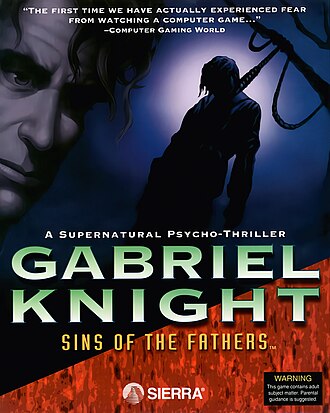
Some adventure games hand you a joke shop and a string of one-liners. Gabriel Knight: Sins of the Fathers hands you a series of voodoo murders, a family secret, and a script that treats both with genuine seriousness. Designed by Jane Jensen and published by Sierra On-Line in 1993, it follows Gabriel Knight, a struggling New Orleans bookstore owner who starts investigating the killings and ends up uncovering his own family’s dark supernatural legacy.
The cast is a big part of why it worked: Tim Curry voices Gabriel and Mark Hamill plays Detective Mosely, and the full voice acting was a genuine event for adventure games at the time. Jensen’s writing leans into family trauma and the real cultural history of voodoo with a level of respect that a lot of games in this genre never bothered attempting.
Ten Days, One Mystery
Gabriel Knight runs on Sierra’s SCI engine with a point-and-click interface, and the whole investigation is structured across ten in-game days. Each day you gather clues, interview characters, and slowly piece the mystery together. The pacing is unusually disciplined for an early-90s adventure game — a few days carry real time pressure, which adds tension without ever feeling arbitrary.
The game weaves in genuine historical and anthropological research on New Orleans voodoo traditions, and as Gabriel digs deeper, the line between folklore and reality blurs in a way that feels earned rather than tacked on. Most of the puzzle design is logical rather than obtuse, and solutions tend to feel satisfying in hindsight instead of arbitrary.
New Orleans itself functions almost as a character in its own right. Gabriel’s bookshop, the French Quarter streets, and the voodoo shops he visits are rendered with enough specific local detail that the setting reads as researched rather than generic “spooky Southern town” set dressing, which matters a great deal for a story built around respecting a real cultural and religious tradition rather than treating it purely as horror-movie decoration.
A Few Things to Know Before You Start
- Talk to everyone about everything, more than once. Dialogue trees refresh as the case develops, and re-interviewing characters after new discoveries often unlocks information you can’t get any other way.
- Some days are on a soft clock. Don’t dawdle indefinitely once you know what you’re supposed to be doing that day, a couple of sequences do expect you to act with some urgency.
- Read everything Gabriel picks up, including books at the shop. Sierra buried real research into the game’s item text, and skimming past it means missing content, not just flavor.
- Save frequently and in multiple slots. Sierra adventures of this era are not shy about dead ends if you’re missing an item from an earlier day.
Where It Sits Among Sierra’s Best
Gabriel Knight stands alongside Day of the Tentacle and Full Throttle as proof that early-90s adventure games could aim for genuine artistic weight rather than just clever puzzles and jokes. It’s a different kind of ambition than King’s Quest’s fairy-tale fantasy or Space Quest’s parody comedy — closer in tone to a mystery novel than a cartoon, and it earns that comparison.
Jensen had previously worked as a writer on Sierra’s King’s Quest VI before taking the lead on an original property, and you can feel the difference that creative ownership makes. Where King’s Quest VI is still fundamentally a fairy tale with dark edges, Gabriel Knight is a contemporary crime drama with supernatural elements, and Jensen’s control over the entire narrative, rather than working within an established fantasy framework, is a big part of why the tone holds together as well as it does across all ten days.
The Sequels, Briefly
Gabriel Knight got two sequels, The Beast Within (1995), a full-motion video production widely regarded as one of the better FMV adventure games of its era, and Blood of the Sacred, Blood of the Damned (1999), a fully 3D entry that arrived as the adventure genre was already losing commercial ground. Neither quite recaptures the specific atmosphere of Sins of the Fathers, which makes the original’s disciplined ten-day structure and 2D SCI-engine presentation feel, in hindsight, like the tightest version of what the series was trying to do.
Why It’s Still Worth Playing
More than thirty years on, it remains one of the clearest arguments that adventure games could handle genuinely adult subject matter without leaning on shock value. Gabriel Knight raised the bar for adult adventure game storytelling, and it holds up beautifully on a replay; the foreshadowing rewards a second trip through New Orleans in ways you won’t catch the first time. Tim Curry’s performance and the authentic setting still combine into something genuinely atmospheric decades later.
If I’m being honest about the flaws: a handful of the day-based puzzles hinge on being in the right place at a specific time without much warning, and if you miss a trigger you can end up wandering the map wondering what you’re supposed to be doing next. It’s a small price for a script this good, but it’s worth knowing going in.
Running It in DOSBox
Once you have the game files from a legitimate copy, extract them and open DOSBox. New to the emulator? Our DOSBox setup guide walks through the basics. From there, use mount c [folder] then c: to switch drives, and run GK.EXE to launch. The guide also covers sound card configuration if the voice acting doesn’t come through cleanly on first try.
You might also like: