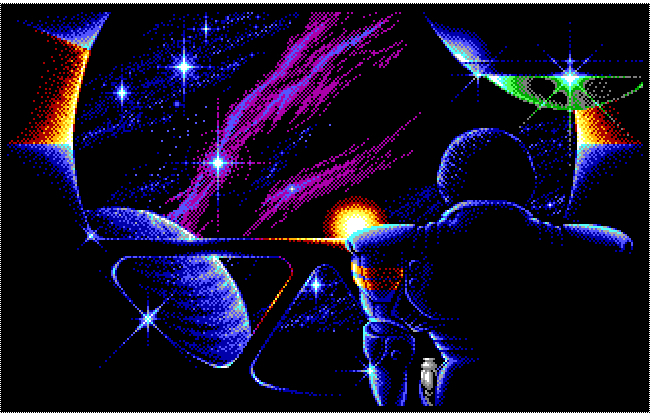
Long before Epic MegaGames became the company behind Unreal and, much later, Fortnite, it was just another shareware publisher trying to carve out a niche in a crowded DOS market. Overkill, subtitled “The Six Planet Mega-Blast” and developed by Tech-Noir in 1992, was part of that early push — and it’s a good reminder of how the publisher built its reputation before switching genres entirely.
Six Planets, One Shareware Episode
Overkill follows the classic Apogee-style shareware model: a free episode to hook players, with additional planets reserved for registered owners. You pilot a starfighter through six distinct planetary battle zones, each with its own visual theme, enemy patterns, and a boss guarding the way to the next stage — a structure that gave even the free portion a real sense of escalation.
Coming out during Epic MegaGames’ early push into the shareware shooter market, Overkill is part of what established the publisher’s reputation for polished VGA action games with strong soundtracks. It’s a very different identity from the company most people know today, and worth remembering for that alone.
The subtitle itself, “The Six Planet Mega-Blast,” is a good example of the shareware era’s marketing instincts — naming the game around a concrete, countable amount of content (six planets, not just “lots of levels”) gave prospective buyers a clear sense of scale before they’d ever seen a screenshot, a habit that ran through a lot of Apogee-model shareware advertising at the time.
Surviving the Six Planets
- Trade your wide-spread weapon upgrade for concentrated firepower before boss fights — bosses generally reward focused damage over area coverage.
- Learn each planet’s enemy formation patterns rather than reacting individually to each ship; formations repeat, and recognizing them early buys you dodging time.
- Don’t burn through weapon upgrades carelessly early in a stage — later waves and the boss both demand your strongest loadout, not your starting blaster.
- Memorize boss patterns specifically; the difficulty ramp culminates in fights that expect memorized dodging more than reflexive improvisation.
- Treat the shareware episode’s later planets as a genuine skill test rather than more of the same — the enemy density and pattern complexity both increase noticeably from the opening planet.
Tech-Noir and the VGA Shooter Boom
Tech-Noir wasn’t a household name even in 1992, and information about the studio’s other work is scarce today, which is fairly typical for small shareware-era developers who released a handful of titles and then largely disappeared from the historical record. What we do know is that Overkill fits squarely into a broader early-90s trend: small teams using VGA graphics and increasingly capable sound cards to make vertical shooters that could compete visually with arcade cabinets, at a fraction of the budget.
That VGA-and-soundcard combination is a big part of why shareware shooters like this one felt like a genuine step up from earlier CGA and EGA action games, even when the underlying design didn’t push the genre forward mechanically. Overkill’s presentation, not its innovation, is what made it stand out on a crowded shareware BBS listing in 1992.
A Snapshot of Early Epic MegaGames
It’s genuinely strange, in hindsight, to look at a tight vertical shmup and know it came from the same publisher that would eventually define AAA shooters and the modern battle royale genre. But that’s exactly what makes Overkill worth revisiting — it’s a clear snapshot of the early-90s shareware shooter boom, back when Epic MegaGames’ whole identity was built on polished VGA action games rather than industry-defining engines.
Judged purely as a shmup, it’s solid rather than exceptional — tight controls and satisfying weapon upgrades, but without quite the pattern-design ambition of the genre’s best entries. Still, six full planets in a free release was generous for 1992, and the shareware structure means you can judge the whole experience without spending anything.
If I’m honest about where it falls short, the enemy variety within each planet can feel a little thin by the midpoint of the game, and a couple of the mid-tier bosses lean more on raw health than on interesting attack patterns. Neither issue is enough to sour the experience, but they’re the kind of rough edges you’d expect from a small studio working on a tight shareware production schedule.
Where Overkill really earns its keep is in short sessions rather than one long sitting. The six-planet structure lends itself naturally to picking it up for a single planet at a time, which suits how a lot of players actually experienced shareware shooters in the early 90s — a quick blast during a lunch break rather than a marathon session.
If you’ve got any nostalgia for the genre at all, it’s worth playing through at least the first two or three planets just to get a feel for how confidently early Epic MegaGames could execute a straightforward idea, well before the company’s ambitions grew several sizes larger.
Downloading Overkill
If DOSBox is new territory for you, start with our DOSBox setup guide before going further.
Setting Up the Six Planets
Unzip the download into a dedicated folder, for example C:\GAMES\OVERKILL. In DOSBox, mount that folder with mount c C:\GAMES\OVERKILL, switch to the drive using c:, and start the EXE. Vertical shooters like this benefit from a stable frame pace, so if bullet patterns look jerky, adjust DOSBox’s cycles setting — our DOSBox guide has more detail on tuning performance for action games.
Watch the Blast
You might also like: