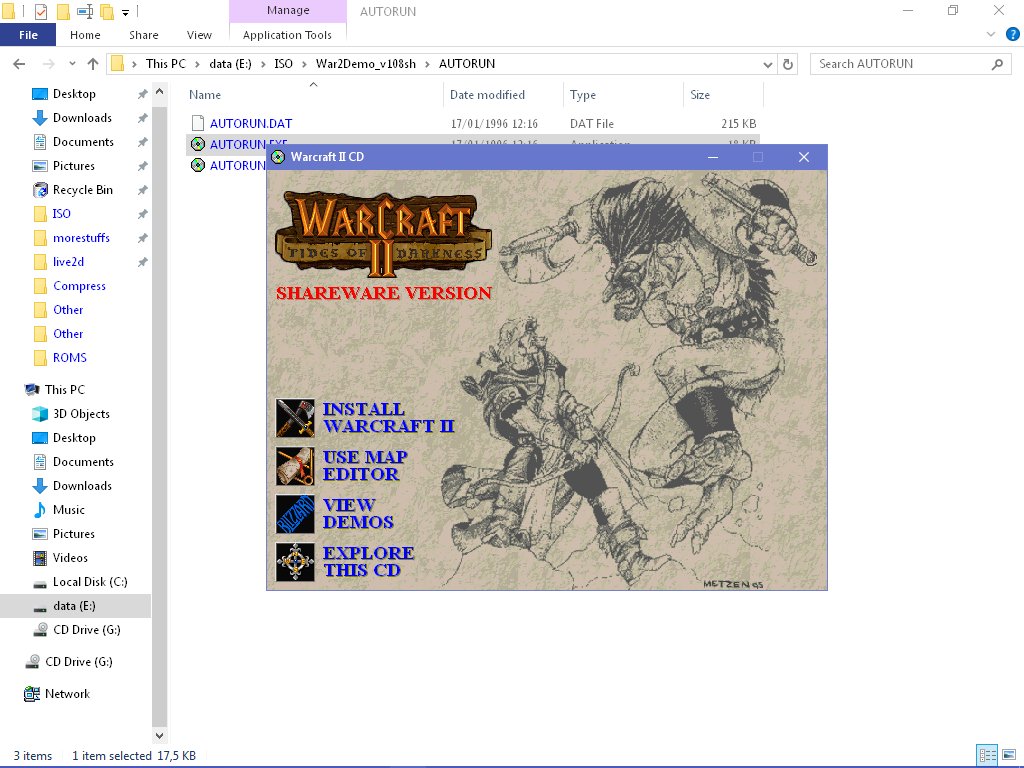
Three months. That’s how much time separated the release of Command & Conquer and Warcraft II: Tides of Darkness in 1995, and those three months turned into one of the defining rivalries of PC gaming’s decade. Two studios, working independently, arrived at the same conclusion at almost the same moment: real-time strategy was ready to become a mainstream genre rather than a niche experiment, and whoever executed it best would define how an entire generation of players thought “strategy games” were supposed to work. Warcraft II didn’t win that race by being first — it won by being the game a company barely four years old had been quietly building toward since it stopped making other people’s games and started making its own.
A Company That Changed Its Name Twice Before It Found “Blizzard”
Warcraft II’s developer began life in 1991 as Silicon & Synapse, founded by three UCLA graduates — Michael Morhaime, Allen Adham, and Frank Pearce — who initially made their money porting and developing games for other publishers rather than shipping original titles under their own name. By late 1993, co-founder Adham had soured on the “Silicon & Synapse” name, worried it read as generic hardware jargon rather than a studio identity, and the company briefly rebranded to “Chaos Studios.” That name lasted only a matter of months: a Florida company called Chaos Technologies already held claim to “Chaos” in a business context, and rather than fight it out, Silicon & Synapse’s leadership paid roughly $100,000 to license the rights and then abandoned the name anyway in favor of something else entirely. Adham reportedly settled on “Blizzard” while flipping through a dictionary, with “Midnight Studios” as the closest runner-up. The studio formally became Blizzard Entertainment on May 24, 1994 — and released Warcraft: Orcs & Humans, its first major original title under the new identity, that same year. Warcraft II, released the following December, was in other words not a sophomore effort from an established studio, but the second real swing from a company that had renamed itself twice in eighteen months trying to figure out what it actually was. The naming turmoil is easy to laugh off in hindsight, but it’s a useful reminder that the studio which would eventually become synonymous with polish and identity spent its first several years still working out what it wanted to be called, let alone what it wanted to build.
Two Armies, Two Companies, One Season
Warcraft II: Tides of Darkness shipped on December 9, 1995, published in North America by Davidson & Associates, the educational-software company that had acquired a controlling stake in Blizzard the previous year. Westwood Studios’ Command & Conquer had beaten it to shelves on September 26, 1995, and by the following spring C&C had already sold roughly 500,000 copies, climbing past a million by that September — numbers that made unmistakably clear the RTS genre had crossed over from enthusiast niche to mass-market category almost overnight. The two games invited constant comparison not because they were identical, but because they weren’t: C&C leaned into a grounded, near-future military fiction with a driving industrial-techno soundtrack, while Warcraft II doubled down on the high-fantasy orcs-versus-humans setting its predecessor established, with a noticeably more colorful, readable art style suited to fast unit identification at a glance. Reviewers and players spent the next year picking sides, and the competition between the two studios’ design philosophies is widely credited with accelerating RTS design conventions — base-building pacing, unit-counter balance, mission-based campaigns — faster than either studio would likely have managed alone. The three-month gap between the two releases turned out to matter less than the fact that both landed in the same holiday buying season, effectively forcing millions of the same shoppers to weigh one against the other directly rather than encountering them years apart.
Gold, Lumber, and Oil: How Warcraft II’s Economy Works
Where Warcraft II distinguished itself mechanically was resource complexity. Players managed three distinct resources — gold mined from deposits, lumber harvested from forests, and oil drawn from offshore platforms — rather than the single-resource economies common in earlier strategy titles, forcing a layer of logistics planning that stretched beyond simply massing units. Oil specifically enabled the game’s naval and some aerial content, giving Warcraft II combat theaters its predecessor never had: warships and transport vessels contest sea lanes, while the Horde’s dragons and the Alliance’s gryphon riders extend combat into the air. Ground armies are built around faction-specific spellcasters — mages and paladins for the Human Alliance, ogre-mages and death knights for the Orcish Horde — whose abilities meaningfully diverge rather than mirroring each other with reskinned stats. A blacksmith building handles weapon and armor upgrades for existing units, and population capacity is governed by constructing farms, meaning expansion always required balancing military production against the infrastructure needed to support it.
Voice Lines and Unit Pathing: DOSBox Settings for Warcraft II
Warcraft II is more forgiving of DOSBox settings than many action titles of its era, but a few adjustments make a real difference. A cycles setting in the 3000–6000 range generally keeps unit pathing and combat animation smooth without introducing the speed-up glitches that can occur if cycles are pushed too high on an RTS built around careful timing. Sound Blaster emulation should be configured and selected in-game specifically for the unit voice lines — a signature feature of the Warcraft series from this point forward, and a large part of what gave Warcraft II’s units personality that competing RTS titles of the period generally lacked. Multiplayer via DOSBox requires either IPX emulation or a null-modem serial connection depending on which version’s setup files are being used, since Warcraft II predates internet matchmaking entirely and originally relied on direct connections, modem-to-modem play, or Blizzard’s early Battle.net-adjacent services introduced later in the game’s lifecycle.
Five Tips for Getting Started
- Balance all three resources from the opening minutes. Neglecting oil in particular leaves you unable to field ships or aerial units later, even if gold and lumber income look healthy.
- Build farms ahead of your population needs, not after hitting the cap. Population housing takes time to construct; running out of supply mid-battle stalls reinforcements at the worst moment.
- Use spellcasters defensively before committing them to offense. Mages and ogre-mages are fragile in melee range; position them behind frontline units rather than leading an assault with them.
- Scout oil platforms early if playing a map with naval terrain. Securing offshore oil access before an opponent locks you out of ship production for the rest of the match.
- Upgrade at the blacksmith incrementally rather than saving gold for a single big purchase. Early weapon and armor upgrades compound in value over a long match far more than a late-game lump investment.
The Expansion Blizzard Finished Itself
Warcraft II’s 1996 expansion, Beyond the Dark Portal, has its own behind-the-scenes story that says something about Blizzard’s standards even this early in its history. The expansion was originally being developed in collaboration with an outside studio, Cyberlore Studios, but partway through development Blizzard reviewed the work at a milestone check-in and judged it below the quality bar the base game had set. Rather than ship a weaker expansion under its name, Blizzard cancelled the arrangement with Cyberlore and finished Beyond the Dark Portal internally before releasing it. That decision — walking away from outside development help mid-project rather than compromising on quality — is a small, under-told example of the perfectionist reputation Blizzard would become known for over the following decades, well before StarCraft or World of Warcraft made that reputation famous.
Legacy: The Blueprint for Everything Blizzard Built Next
Warcraft II’s commercial success gave Blizzard the standing and resources to build StarCraft two years later, refining the base-building and unit-balance ideas Warcraft II had established, and eventually to build the Azeroth universe into World of Warcraft — arguably the most commercially successful subscription game ever made. None of that trajectory was guaranteed in 1995; Blizzard was still a young studio competing directly against a well-funded rival release from Westwood, and Warcraft II’s win in that comparison mattered enormously to how the rest of the decade played out for both companies. Players interested in the broader mid-’90s strategy landscape Warcraft II helped define should also look at contemporaries working the same territory from different angles, including the earlier real-time economy-building of Dune II, widely credited as the genre’s direct template, and the turn-based empire management of Civilization, which proved strategic depth could sell just as well without real-time pressure.
You might also like: