
Warcraft II and Blizzard’s 1995 Race With Command & Conquer
Oil, ships and dragons gave Warcraft II its edge; Computer Gaming World’s 1996 reader polls put it half a point ahead of Command & Conquer, which took the editors’ award.
Free classic DOS game downloads and reviews
Oil, ships and dragons gave Warcraft II its edge; Computer Gaming World’s 1996 reader polls put it half a point ahead of Command & Conquer, which took the editors’ award.
Clouds of Xeen was designed as one half of a world. What the 1992 and 1993 magazines reported about the merge, the interface and the journal, and where the combined edition sells.
How an IBM request for a PCjr showpiece became King’s Quest: rooms stored as drawing instructions, the four-object limit, Roberta Williams on story and parser, and the editions in order.
Who made Eye of the Beholder? CGW’s 1991 credit box, two reviewers, the DOS ending, and the trilogy now sold on Steam and GOG.
X-Wing turns each Rebel starfighter into a battery split between engines, lasers and shields. A look at the 1993 game through its credits, a June 1993 review and what Steam and GOG sell now.
How Dave Gibbons’ pencil backgrounds became a 320 by 200 DOS adventure, how Virtual Theatre let the city live, and which 1994 editions are freeware today.
Tim Sweeney recalls Epic Pinball as a nine-month build that earned over a million dollars in royalties. Here is how his account checks against 1994 magazines and the studio.
Daggerfall was advertised as twice the size of Great Britain. What Computer Gaming World’s review found, the patch that fixed 25 problems in three weeks, and the no-cost release Bethesda offers now.
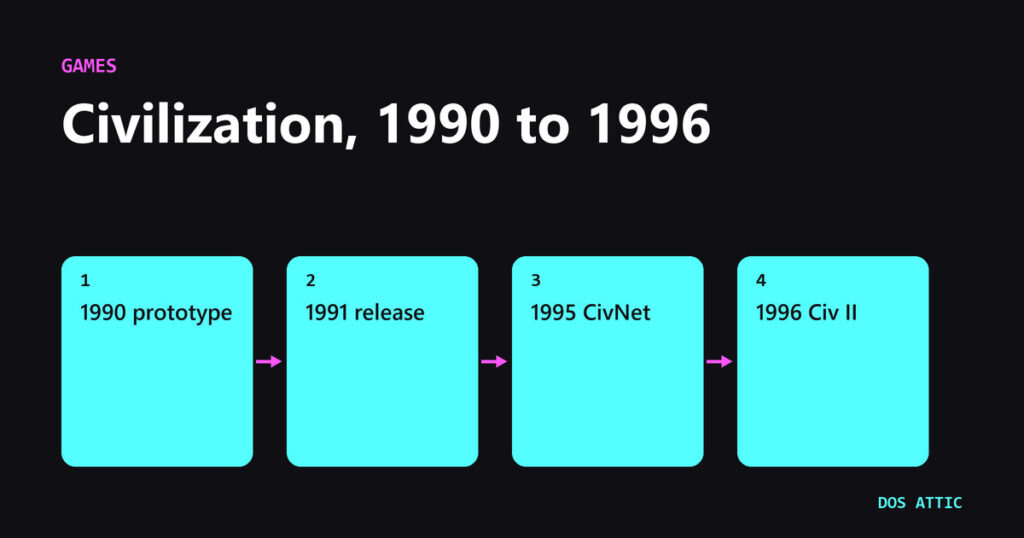
How Civilization went from a May 1990 floppy disk to a 1991 game: the board game it shared a name with, the real-time prototype, the city and revolt mechanics from a 1991 preview and three releases compared.
Éric Chahi’s own notes say the PC version of Another World added a level the Amiga original lacks. How a one-person engine drew its scenes, what each platform changed, and which edition is sold now.
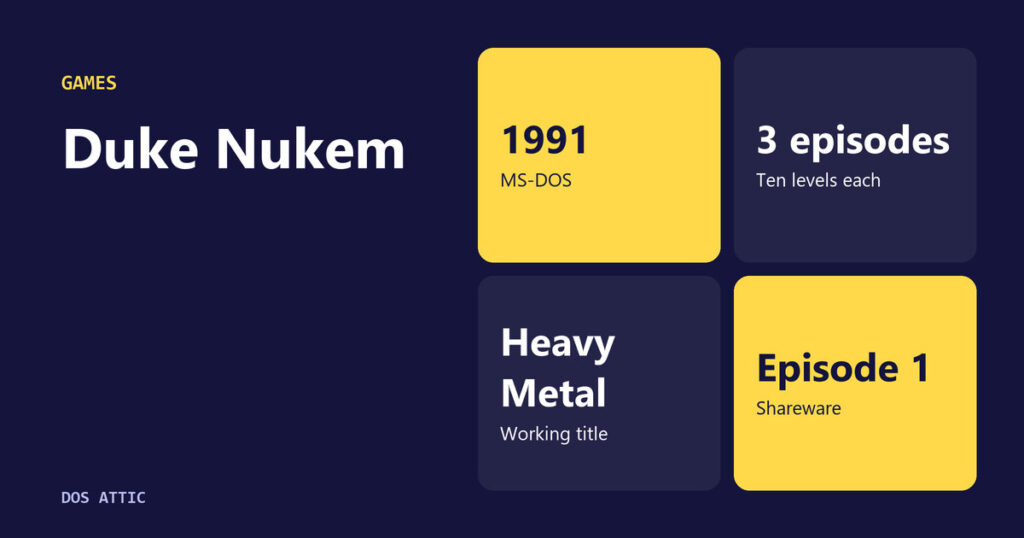
The first Duke Nukem was a 2D Apogee shareware platformer from 1991 with three ten-level episodes, a Captain Planet name scare and no current official PC sale.
A Virgin licensing mix-up put the II on a game that was not a sequel; Brett Sperry’s account, the spice-harvest loop and CGW’s 1993 award made it the template for later strategy games.