
Dangerous Dave and the Overnight Demo Behind id Software
Dangerous Dave was a 1988 Apple II program; the one-night Super Mario Bros. 3 demo that used his sprite led to Commander Keen, an Apogee deal and id Software.
Free classic DOS game downloads and reviews
Dangerous Dave was a 1988 Apple II program; the one-night Super Mario Bros. 3 demo that used his sprite led to Commander Keen, an Apogee deal and id Software.
Hocus Pocus counted 16 realms, 36 levels and four episodes, but only nine levels were free. The 1994 review explains the 256-color VGA floor behind its look.

Mechner filmed his brother in 1985, borrowed six seconds of a 1938 film and cut fifty planned levels to ten. Here is how Prince of Persia came together and sold.

Rise of the Triad let eleven players share a network when Doom allowed four. Period magazines and Apogee’s own pitch show how a cancelled Wolfenstein sequel became a showcase sold on shareware.

ZZT earned about a hundred dollars a day; Jill of the Jungle arrived with a new company name. Tim Sweeney’s interview and a 1993 review show how Epic began.

A reviewer timed Heretic levels at 19.59 minutes on average. Magazine pages from 1994 and 1995 show what Raven changed in id’s engine, how id sold the game and where the source went.
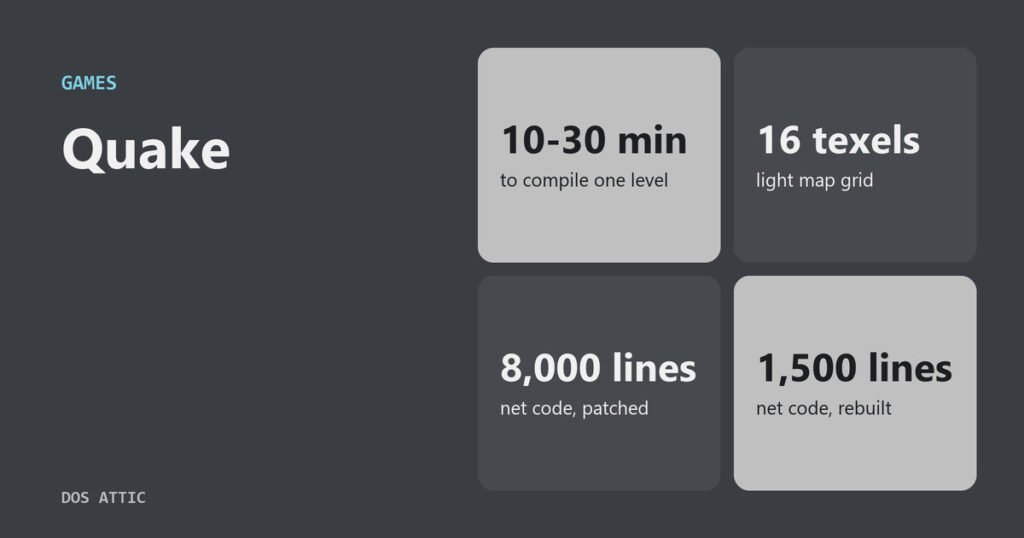
Quake baked its visibility and light before play, drew doors, monsters, sprites and particles in four ways, and rebuilt its net code for QuakeWorld. A look at the engine through Michael Abrash’s own account.

Wolfenstein 3D kept a stealth game’s name and threw away its design. Magazine reviews, id’s own source notes and a 1994 trade feature show what it cost, how it was sold and where it stopped.
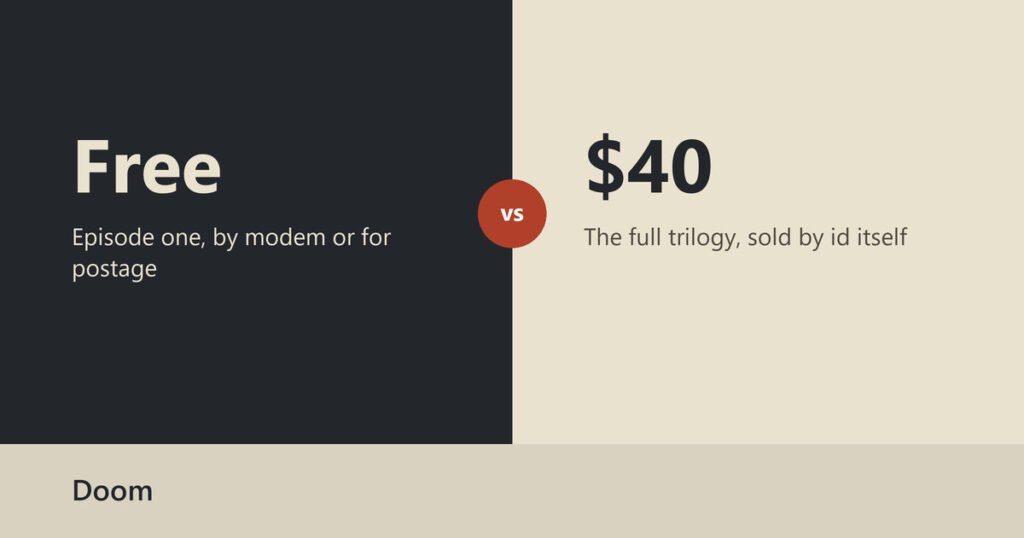
Doom’s free first episode reached players through a crowded university server, a mail-order offer for the price of postage and a bulletin board. Period magazines show how id built that pipeline.