
The Enormous, Hastily Patched World of Daggerfall
Daggerfall was advertised as twice the size of Great Britain. What Computer Gaming World’s review found, the patch that fixed 25 problems in three weeks, and the no-cost release Bethesda offers now.
Daggerfall was advertised as twice the size of Great Britain. What Computer Gaming World’s review found, the patch that fixed 25 problems in three weeks, and the no-cost release Bethesda offers now.
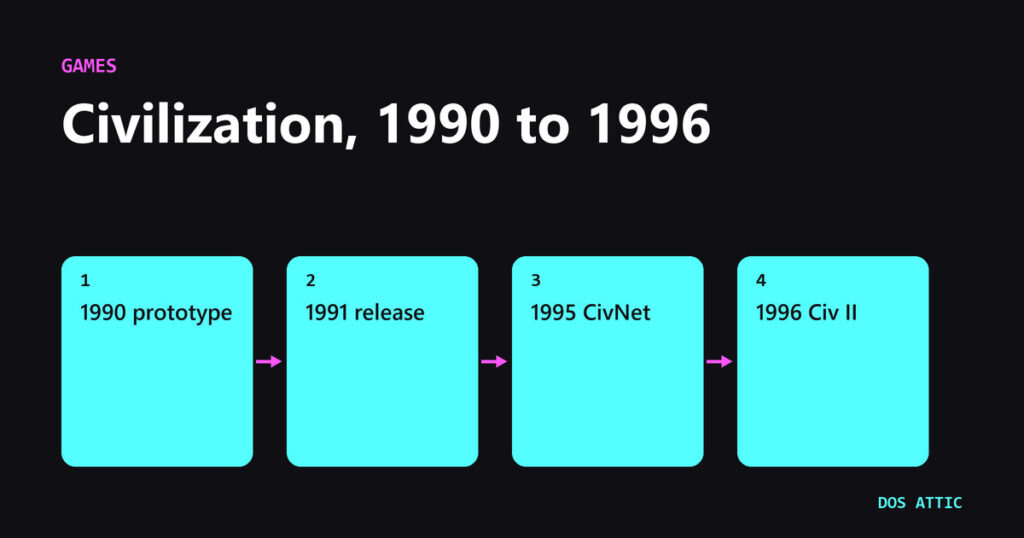
How Civilization went from a May 1990 floppy disk to a 1991 game: the board game it shared a name with, the real-time prototype, the city and revolt mechanics from a 1991 preview and three releases compared.

Éric Chahi’s own notes say the PC version of Another World added a level the Amiga original lacks. How a one-person engine drew its scenes, what each platform changed, and which edition is sold now.
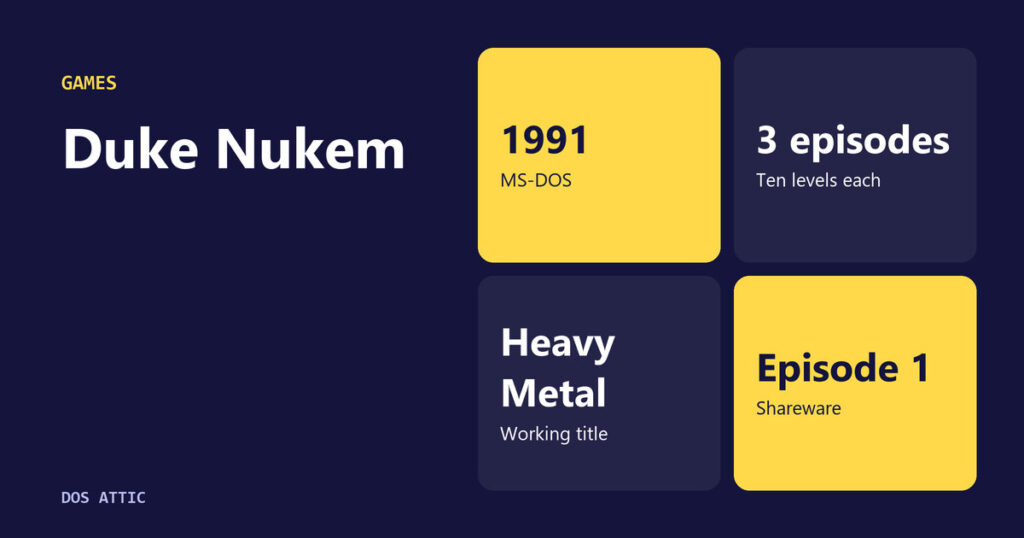
The first Duke Nukem was a 2D Apogee shareware platformer from 1991 with three ten-level episodes, a Captain Planet name scare and no current official PC sale.

A Virgin licensing mix-up put the II on a game that was not a sequel; Brett Sperry’s account, the spice-harvest loop and CGW’s 1993 award made it the template for later strategy games.
Dangerous Dave was a 1988 Apple II program; the one-night Super Mario Bros. 3 demo that used his sprite led to Commander Keen, an Apogee deal and id Software.
Hocus Pocus counted 16 realms, 36 levels and four episodes, but only nine levels were free. The 1994 review explains the 256-color VGA floor behind its look.

ZZT earned about a hundred dollars a day; Jill of the Jungle arrived with a new company name. Tim Sweeney’s interview and a 1993 review show how Epic began.

Rise of the Triad let eleven players share a network when Doom allowed four. Period magazines and Apogee’s own pitch show how a cancelled Wolfenstein sequel became a showcase sold on shareware.

Mechner filmed his brother in 1985, borrowed six seconds of a 1938 film and cut fifty planned levels to ten. Here is how Prince of Persia came together and sold.
Seven DOS-era games offered at no cost by their owners or by ScummVM’s freeware list, with the page that shows each permission and a note on what a zero price does not cover.
A sourced timeline of DOS gaming from IBM’s 1981 PC to Windows 95: open hardware, the PCjr, Apogee’s free first episode, Doom’s engine and the claims about ‘first’ that sources do not agree on.